The Aid Curse
Testimony by Yared Hailemariam Ethiopian Human Rights Defender
CRIME AGAINST HUMANITY IN ETHIOPIA:
THE ADDIS ABABA MASSACRES
OF JUNE AND NOVEMBER 2005
EXTRAORDINARY JOINT COMMITTEE MEETING
THE EUROPEAN PARLIAMENT
COMMITTEES UNDEVELOPED AND FOREIGN AFFAIRS, AND SUB-COMMITTEE ON
HUMAN RIGHTS
May 15, 2006
honorable Chairwomen, Mrs. Ana Gomes, honorable Chairwomen of the Development Committee and the Human Rights Sub-committee and Members of the European Parliament, representatives of the European Commission and the AustrianPresidency of the Council, ladies and gentlemen. First of, I would like to thank theorganizers for giving me this opportunity.
My name is Yared Hailemariam. I have worked for the last seven years for the Ethiopian Human Rights Council (EHRCO) as a human rights investigator. I am forced to live inexile following the massacre on November 1 and 2, 2005 in Addis Ababa, because my name was subsequently published on the governments wanted list along with those ofopposition leaders, dissidents and activists who are accused of treason and genocide. Yet,I was not even in the country at the time of the November protests, but attending a Human Rights Defenders Conference in Entebbe organized by Amnesty International with the cooperation of the East and Horn of Africa Human Rights Defenders Project and YorkUniversity, Canada. Therefore, I had to stay abroad rather risk imprisonment or worse in Ethiopia but will continue my work indepenendently as a human rights defender.I testify as some one who does not belong any political party and is committed to impartial and independent human rights work.
While attention is duly paid to recent and ongoing human rights abuses, these abuses fall within the pattern of systematic and widespread human rights violations committed overthe past 14 years. In the course of my seven year career with EHRCO, I have received almost on a daily basis, numerous complaints and heard testimonies concerning human rights violations of all sorts. Such violations included extra-judicial killings, torture, beatings, enforced disappearances, rape, and arbitrary detention for months or even years without a day in court.
The Ethiopian Human Rights Council (EHRCO) is the first and only organization in Ethiopia has always been under immense pressure from the government since its establishment. The pressure, however, has intensified since June 2005. Six EthiopianHuman Rights Council staff members and members of the regional committees, including myself, were detained for several weeks following the Addis Ababa massacre by thegovernment. Two of the Ethiopian Human Rights Council's senior investigators who were highly committed to the protection and promotion of human rights, Wondemagegn Gashu and Chernet Taddesse, were also forced to go into exile.
Four human rights defenders, including the well known defender Professor Mesfin Woldemariam, former chair and founder of EHRCO, are charged in the on going treason and genocide trial. Such cases clearly show to the world that human rights defenders inEthiopia are at high risk and face various kinds of repression, intimidation and harassment, including now charges carrying possible death sentences. In fact, although I can't speak for EHRCO anymore, I can say that the organization is virtually paralyzed and consequently, Ethiopians are left without any organization they can tell their stories to or that can investigate and bring to light the brutal day-to-day reality of serious human right violations.
My testimony today focuses on the political killings by the security forces, in three incidents in the past year - the June and November post-election demonstrations, where I have new evidence to present indicating the scale of killings was much greater than whatthe government admitted and confirming our fears that bodies had been secretly removed from hospital morgue and buried in a mass grave; and a separate hardly-reported killingof dozens of detainees in Kaliti prison on 2 November at the same time as the street demonstration and killings but not including arrested demonstrators. I have volumes of documentation on the atrocities comprising figures and pictures but can only present few examples within the time constraints of presentation. In doing so, I would like you, Honorable Chair and ladies and gentleman, to bear in mind that what you will bewactching, are not just figures and images, but fellow human beings, with names, addresses, loved ones dreams and life-plans.
The Kaliti prison incident occurred when a policeman began an argument with a prisoner. Soon the policeman started physically assaulting him in front of other prisoners. The prisoner tried to defend himself, but other prison guards joined the assault and knocked him out. This led to a noisy protest from the other prisoners, some of whom reportedly began throwing rocks at the guards. At this point, the guards came out in full force withtheir automatic guns, fired shots and forced the prisoners into their cells, and some of my sources say they locked the doors from outside to prevent escape and they fired upon the prisoners inside.
The wall of the prison cell is made of corrugated iron sheet and it was riddled with bullets which even strayed to other buildings. Prisoners were huddled together and tried to use any cover, blanket, mattress, even bodies of their prison mates, anything to shield them from the fiery bullets that were raining upon them from outside and piercing their bodies like knives but very few escaped. Thus on that black day, prisoners awaiting their court verdict and some already convicted, were executed in this way like dogs, and some oftheir bodies were left unpicked even for a couple of days. The police later announced thatseven prisoners were killed while trying to break from jail. But the fact was that at least60 prisoners were killed. You will find the attached list of 60 killed prisoners. About 26prisoners who received injuries were taken to the Police Hospital for treatment under tight security, and some of these died later. Many of the bodies from the prison were taken tothe Menelik Hospital and not many of their families knew about what happened to their loved ones.
If this atrocity remains hidden, it will encourage the authorities to continue with their crimes and there will be nothing to prevent them from doing the same to the political prisoners now in Kality.
Human rights situation in Ethiopia: After the May 2005 elections
The Ethiopian human rights situations deteriorated significantly since the evening of May15th 2005. In the evening of the election day Prime Minster Meles Zenawi told the Ethiopian people that he has decided to bring all the military, security and police forces under his direct command and that were from then on solely accountable to him. Inaddition, he declared that any public meetings and demonstrations were banned and notallowed for a period of one month.
That decision of the ruling party and the announcement of the fraudulent provisional results of the election have led the country to a political crackdown and turmoil. The opposition parties accused the ruling party and government of rigging the election. Opposition supporters started a protest against the announced result in a peaceful manner. However, the government started its widespread and systematic attacks directly targeting members and supporters of the opposition parties. It was reported by different local and international human rights organizations that the security forces committed human rights violations like acts of murder, torture, enforced disappearance of people, persecution against identifiable individuals and groups on political grounds.
Some of the major incidents which happened then were:
- On June 5, 2005 at midnight the campus security guards, accompanied by government security agents, entered student dormitories at Addis Ababa University Sidist Kilo campus and attempted to arrest some students who they suspected of being members and supporters of the Coalition for Unity and Democracy (CUD).The students reacted to the attempted arrest, gathered at Sidist Kilo campus and passed the whole night expressing their disapproval.
- On June 6, 2005 students continued the protest with a hunger strike in connectionto the election irregularities. Regarding the results of the election, the students demanded that the problems be solved "by legal means" and demanded "respect forthe vote of the people". Students from Arat Kilo, Amist Kilo and Sidist Kilo campuses gathered at Sidist Kilo campus. While they were peacefully protesting, members of the Federal Police invaded the campus at 11:00 a.m., beat the students, arrested them and took them to Sendafa Police Training Center. In addition to theAddis Ababa University students, some Kotebe Teachers' College students werealso arrested and taken to Sendafa Police training Center. Although some of the students were released after a few days, 190 students were detained at least for onemonth at Sendafa military camp.
- Following the protest staged by the Addis Ababa University students, there were clashes between students of higher educational institutions and the security forcesin different towns in the country. These clashes took place between June 6, 2005and June 8, 2005.
- On 6th to 8th of June 2005, at least 62 people were killed, hundreds were injured,more than 4000 were arrested and detained at Ziway Prison and other thousands were detained in various regional states prisons and military camps. I was one ofthe detainees at Ziway Prison.
- November 1st to 4th, 2005 witnessed bloodshed in Addis Ababa. Federal Police andmilitary force armed with heavy machine guns and sniper rifles shot indiscriminately and killed at least 70 innocent civilians who were protesting peacefully. At least 200 were wounded and more than ten thousand detained including leaders and members of CUD. Most of the victims were shot in the chestand head causing them to die in the streets of Mercato and some other parts of thecapital. The number of people who were hospitalized because of injury and thosethat were treated at home because they could not afford the medical cost is more than 120. Many of the detainees were badly beaten. They were also prevented from being visited by their families.
- Families who went to hospitals to recover the bodies of their relatives were told that they had to sign a document saying that the opposition party was responsible for the killing.
- On November 2, 2005 mass killings of prisoners happened at Kaliti Prison in Addis Ababa and at least 60 prisoners where killed while they were in their cell with some of them still asleep. However police had reported to the public that only seven prisoners were killed while attempting to escape. I later will present to youthe list of 60 killed prisoners with more detailed information.
Following the CUD call for non-violent demonstration at the 31st December 2005, Police arrest and canceled the licenses of several taxi divers in the capital Addis Ababa who had been taking part in a demonstration called by the main opposition party.
There were further daily student protests and clashes with police in January and February2006, when a number of students were shot, wounded, beaten and tortured. Conclusion
The details of those innocent civilians indiscriminately killed and the attached photographs of their dead bodies have shown that many of them were shot in their chest and head causing them to die. These killings were committed by heavily armed military force with heavy machine guns and sniper rifles. The character of the killings clearly indicate that the intention of the government was not to stop the riots but suggest that itwanted to take revenge on residents of Addis Ababa for not giving them their vote for notvoting in its favor.
All the evidences: photographs, detailed informations abut the killings, testimonies ofeye witnesses and other evidences about the incidents indicate that these acts of killings were committed by the government intentionally. Circumstances of the incidents indicated that government officials - particularly the direct commander of the security force PM. Meles Zenawi - had purposely allowed conditions that were causing mass deaths to continue.
How does the European Parliament perceive the purposive killings and the reprisal shootings of innocent civilians by the Ethiopian authorities? How do you perceive the mass killing of 60 prisoners at Kaliti prison while some of them were sleeping? How do you perceive the fact of people being tortured to death in Ziway, Shewarobit, Dedesa,Sendafa, Tateq and other detention camps? How do you perceive the intentional starvation of thousands of political prisoners who are in detentions camps? How can theinternational community turn a blind eye to these deaths and crimes against humanity? I really need an answer for those questions. These are not only mine but also the questionsof the over 70 millions Ethiopians.
How does the European Parliament perceive the purposive killings and the reprisalshootings of innocent civilians by the Ethiopian authorities? How do you perceive the mass killing of 60 prisoners at Kaliti prison while some of them were sleeping? How do you perceive the fact of people being tortured to death in Ziway, Shewarobit, Dedesa,Sendafa, Tateq and other detention camps? How do you perceive the intentional starvation of thousands of political prisoners who are in detentions camps? How can theinternational community turn a blind eye to these deaths and crimes against humanity? I really need an answer for those questions. These are not only mine but also the questionsof the over 70 millions Ethiopians.
As far as my little knowledge of the Western World is concerned, it is especially theEuropean community that stands and is committed to principles that serve all humanity.Therefore I would like to make a call upon all individuals, governments, human rights organizations and donors who are committed to the promotion and protection of human rights all over the world to make their voices heard against those who committed crime against humanity in Ethiopia.
Recommendation
I call upon the European Parliament and members states of the European Union; To condemn the continued detention of political prisoners including leaders of theopposition party Coalition for Unity and Democracy (CUD), journalists and human rights activists and demand for the immediate and unconditional release of allpolitical prisoners in the country.
To take all necessary measures including banning of all your direct budget funds except humanitarian aid as the United Kingdom has done before to ensure that the Ethiopian government stops all acts of violence.
To establish an impartial and independent international enquiry that investigates the killings of 190 civilians and 7 police officers in the June and November 2005 incidents.
Thank you very much again,
I owe this testimony to God, my country and people and I will tell the stories of those killed and other victims to the world until justice is done. I thrust you will help us with that.
Annex
Persons killed by Security Forces in June and November 2005
Summery of the tables: The below tables has taken the list of 192 killed persons by security forces in June and November 2005 incidents in Addis Ababa.
- 62 list of killed persons in June 2005.
- 70 list of killed persons in November 2005 on the demonstration.
- 60 list of killed prisoners on 2nd November 2005 at Kaliti Prison by security force.
Table 1: Particulars of persons killed in June 2005
NO. Name Age Sex Date of Killing Place Particulars
1 Shibre Desalegn 23 F June 6, 2005 Kotebe Subcity
Shot in the throat and passed away instantly
2 Yesuf Abdela 23 M June 6, 2005 Kolfe- Keraniyo Sub-city
A second year student at Kotebe Teachers College and shot in the back with two bullets.
3 Hadra Shikurana 20 M June 8, 2005 Woreda 3
Shot in the forehead and passed away instantly.
4 Nebiy Alemayehu 16 M June 8, 2005 Kolfe-Keraniyo Sub-city
10th grade student and shot in his chest while he was going home from school.
5 Yonas Asseffa 24 M June 8, 2005 Merkato
Shot in his right ear.
6 Dawit Fekadu 18 M June 8, 2005 Addis Ketema
Shot in his chest and passed away instantly.
7 Melisachew Demissie 16 M June 8, 2005 Addis ketema 6th grade student
shot with two bullets in his forehead while he was on his way to school to take his examination.
8 Wessen Assefa 28 M June 8, 2005 Kuchra Sefer A trader
shot in his chest.
9 Zulufa Surur 50 F June 8, 2005 Woreda 2
A mother of seven and shot in the left side of her back while she was standing at the door of her house.
10 Fekadu Negash 22 M June 8, 2005 Addis Ketema Sub-city
Shot on his chest near to his residence.
11 Abraham Yilma 16 M June 8, 2005 Addis Ketema Sub-city
A brother of Fekadu (no. 10). Upon hearing that his brother was shot by the security forces, Abraham ran to the place where his brother was shot. When he arrived at the scene he stopped to lift up his dying brother. At that moment he was also shot under his left breast and thus the two brothers passed away.
12 Biniyam Dembel 19 M June 8, 2005 A.A.
Shot and passed away on June 10, 2005.
13 Negussie Wabedo Mohammed Hassen - M June 8, 2005 A.A
After being shot in their foreheads the two persons passed away and their bodies were taken and placed in the morgue of St. Paul Hospital. Because their
addresses were not known, only their names were attached to their bodies.
14 Beliyu Dufa 20 M June 8, 2005 Addis Ketema Sub-city
Shot in his chest.
16 Redela Kombado 26 M June 8, 2005 Addis Ketema Sub-city
He was an assistant to a taxi driver and shot in his chest.
17 Milion Kebede 30 M June 8, 2005 Addis Ketema Sub-city
He was a cashier with Anbessa city bus. While he was on his way to work he was shot.
18 Getnet Ayalew 24 M June 8, 2005 Addis Ketema Sub-city
He was shot on his right thigh. While his friend washelping him to reach a secure place, the soldier realizing that he was still alive shot him again, this time on his abdomen. Terrified by the situation his friend ran away and escaped. GenetÂs families came to help him but the soldier took aim and threatened to shoot if they came near his wounded body.
Consequently, they could not help him and he bled for about half an hour. Finally, a Red Cross ambulance lifted him and took him to Zewditu Hospital. He passed away while he was under medical treatment in the hospital.
19 Wassihun Kebede 22 M June 8, 2005 A.A.
He was shot in the head by security forces and passed away.
20 Dereje Damena 24 M June 8, 2005 Addis Ketema Sub-city
He was shot in his forehead behind Addis Ketema School. His family found his body in the morgue of Menilik Hospital on the morrow. They recognized him by his clothes.
21 Esubalew Ashenafi - M June 8, 2005 Woreda 3
He was shot and killed at a place close to his residence.
22 Addisu Belachew 23 M June 8, 2005 Woreda 3
He was a businessman and father of 3 children. He was shot in the eye and passed away.
23 Legesse Tulu 64 M June 8, 2005 Addis Ketema Sub-city
He was a carpenter and father of 5. He was shot on the side part of his body while he was looking for his son.
24 Jafar Seid 28 M June 8, 2005 Addis Ketema Sub-city
He was shot in his forehead and passed away.
25 Ashenafi Derese 22 M June 8, 2005 Woreda 3
He was shot and killed near his residence.
26 Girma Alemu 38 M June 8, 2005 Lideta Subcity
He was shot in his chest and passed away. The wife of the deceased, who is pregnant and without income, is exposed to pressing economic problems.
27 Meki Negash - M June 8, 2005 Addis Ketema Sub-city
He was shot and killed while he was heading to the mosque at Sebategna Agip to attend Islamic education. As his friends were able to take his body immediately it was not taken to hospital.
28 Desta (Her father's name is not known) 28 F June 8, 2005 A.A
She was shot in her chest and admitted to Zewditu Hospital but passed away while in the operation theatre.
29 Beliyu Bayu 20 M June 8, 2005 Merkato
He was shot in the left side of his body.
30 Endalkachew Megersa 18 M June 8, 2005 Woreda 6
He was shot in his forehead.
31 Demeke Kassa 24 M June 8, 2005 Gojam Berenda
He was shot in his forehead.
32 Anwar Kiyar Surur 20 M June 8, 2005 Addis Ketema Sub-city
He was shot in his forehead.
33 Kasim Ali 23 M June 8, 2005 Kolfe Keraniyo Sub-city
He was shot in his forehead.
34 Berhanu Aynie 20-25 M June 8, 2005 Woreda 3
He was shot by Government security forces in front of Addis Ketema School and passed away.
35 Imamu Ali 21 M June 8, 2005 Kolfe Keraniyo Sub-city
He was shot and killed.
36 Ermias Fekadu 20 M June 8, 2005 A.A.
He was shot and killed.
37 Aliyu Yusuf 20 M June 8, 2005 A.A.
He was shot and killed.
38 Tesfaye Delgeba 19 M June 8, 2005 A.A.
He was shot and killed.
39 Habtamu Amensisa 30 M June 8, 2005 A.A.
He was shot and killed.
40 Gezahegn Mengesha 15 M June 8, 2005 A.A.
He was shot and killed.
41 Asnakech Asseffa 35 F June 8, 2005 A.A.
She was shot and killed.
42 Rebuma Eshete 34 M June 8, 2005 A.A.
He was shot and killed
43 Samson Negash - M June 8, 2005 A.A
Shot dead and his body was taken and placed at the morgue of Tikur Anbessa hospital. (Police record number 13097)
44 Fekadu Haile - M June 8, 2005 A.A.
Shot dead and his body was found at Tikur Anbessa hospital. (Police record number is 13907)
45 Fekadu Hailu - M June 8, 2005 A.A.
He was shot and killed. His body was taken and placed at the morgue of Tikur Anbessa hospital.(Police record number 13903)
46 Mubarek - M June 8, 2005 A.A.
Shot dead and his body was taken and placed at the morgue of Police Hospital. (police record number 00426)
47 Beyene Nuru Bizu - M June 8, 2005 A.A.
Shot dead his body was taken and placed at the morgue of Police Hospital. (Police record number 00437)
48 Abebe Antenehi - M June 8, 2005 A.A.
Shot dead and his body was taken and placed at the morgue of Police Hospital. (Police record number 00441)
49 Unidentified - M June 8, 2005 A.A.
Shot dead and his body was taken and placed at the morgue of Torr Hailoch Hospital (military hospital).(Police record number 00447)
50 Unidentified - M June 8, 2005 A.A.
Shot dead and his body was taken and placed at the morgue of Police Hospital. (Police record number 57351)
51 Unidentified - F June 8, 2005 A.A.
Shot dead and her body was taken and placed at the morgue of Police Hospital. (Police record number 00429)
52 Unidentified - M June 8, 2005 A.A.
Shot dead and his body was taken and placed at the morgue of Police Hospital. (Police record number 00438)
53 Unidentified - M June 8, 2005 A.A.
Shot dead and his body was taken and placed at the morgue of Police Hospital. (Police record number 00425).
54 Unidentified - M June 8, 2005 A.A.
Shot dead and his body was taken and placed at the morgue of Police Hospital. (Police record number 00432).
55 Unidentified - F June 8, 2005 A.A.
Shot dead and her body was taken and placed at the morgue of Police Hospital. (Police record number 00428).
56 Unidentified - M June 9, 2005 A.A.
Shot dead and his body was taken and placed at the morgue of Tor Hailoch Hospital.(Police record number 00450)
57 Unidentified - F June 8, 2005 A.A.
Shot dead and her body was taken and placed at the morgue of Police Hospital. (Police record number 00431)
58 Unidentified - M June 8, 2005 A.A.
Shot dead and his body was taken and placed at the morgue of Police Hospiatal. (Police record number 00430)
59 Unidentified - M June 8, 2005 A.A
Shot dead and his body was taken and placed at the morgue of Police Hospital. (Police record number 00436)
60 Mitiku Wendima - M June 8, 2005 A.A.
Shot dead and his body was taken and placed at the morgue of Police Hospital. (Police record number 00427)
61 Tesfaye Adane Garo - M June 10, 2005 Oromia region, Arisi
Shot dead and his body was taken and placed at the morgue of Tikur Anbessa Hospital.
62 Tadele KambadoAwel- M June 20, 2005 A.A.
He was shot and killed. His body was taken and placed at the morgue of Tikur Anbessa Hospital.
List of killed from no. 1-42 was reported by EHRCO.
List of killed from no. 42-61 was taken from the police list.
Read more!

THE ADDIS ABABA MASSACRES
OF JUNE AND NOVEMBER 2005
EXTRAORDINARY JOINT COMMITTEE MEETING
THE EUROPEAN PARLIAMENT
COMMITTEES UNDEVELOPED AND FOREIGN AFFAIRS, AND SUB-COMMITTEE ON
HUMAN RIGHTS
May 15, 2006
honorable Chairwomen, Mrs. Ana Gomes, honorable Chairwomen of the Development Committee and the Human Rights Sub-committee and Members of the European Parliament, representatives of the European Commission and the AustrianPresidency of the Council, ladies and gentlemen. First of, I would like to thank theorganizers for giving me this opportunity.
My name is Yared Hailemariam. I have worked for the last seven years for the Ethiopian Human Rights Council (EHRCO) as a human rights investigator. I am forced to live inexile following the massacre on November 1 and 2, 2005 in Addis Ababa, because my name was subsequently published on the governments wanted list along with those ofopposition leaders, dissidents and activists who are accused of treason and genocide. Yet,I was not even in the country at the time of the November protests, but attending a Human Rights Defenders Conference in Entebbe organized by Amnesty International with the cooperation of the East and Horn of Africa Human Rights Defenders Project and YorkUniversity, Canada. Therefore, I had to stay abroad rather risk imprisonment or worse in Ethiopia but will continue my work indepenendently as a human rights defender.I testify as some one who does not belong any political party and is committed to impartial and independent human rights work.
While attention is duly paid to recent and ongoing human rights abuses, these abuses fall within the pattern of systematic and widespread human rights violations committed overthe past 14 years. In the course of my seven year career with EHRCO, I have received almost on a daily basis, numerous complaints and heard testimonies concerning human rights violations of all sorts. Such violations included extra-judicial killings, torture, beatings, enforced disappearances, rape, and arbitrary detention for months or even years without a day in court.
The Ethiopian Human Rights Council (EHRCO) is the first and only organization in Ethiopia has always been under immense pressure from the government since its establishment. The pressure, however, has intensified since June 2005. Six EthiopianHuman Rights Council staff members and members of the regional committees, including myself, were detained for several weeks following the Addis Ababa massacre by thegovernment. Two of the Ethiopian Human Rights Council's senior investigators who were highly committed to the protection and promotion of human rights, Wondemagegn Gashu and Chernet Taddesse, were also forced to go into exile.
Four human rights defenders, including the well known defender Professor Mesfin Woldemariam, former chair and founder of EHRCO, are charged in the on going treason and genocide trial. Such cases clearly show to the world that human rights defenders inEthiopia are at high risk and face various kinds of repression, intimidation and harassment, including now charges carrying possible death sentences. In fact, although I can't speak for EHRCO anymore, I can say that the organization is virtually paralyzed and consequently, Ethiopians are left without any organization they can tell their stories to or that can investigate and bring to light the brutal day-to-day reality of serious human right violations.
My testimony today focuses on the political killings by the security forces, in three incidents in the past year - the June and November post-election demonstrations, where I have new evidence to present indicating the scale of killings was much greater than whatthe government admitted and confirming our fears that bodies had been secretly removed from hospital morgue and buried in a mass grave; and a separate hardly-reported killingof dozens of detainees in Kaliti prison on 2 November at the same time as the street demonstration and killings but not including arrested demonstrators. I have volumes of documentation on the atrocities comprising figures and pictures but can only present few examples within the time constraints of presentation. In doing so, I would like you, Honorable Chair and ladies and gentleman, to bear in mind that what you will bewactching, are not just figures and images, but fellow human beings, with names, addresses, loved ones dreams and life-plans.
The Kaliti prison incident occurred when a policeman began an argument with a prisoner. Soon the policeman started physically assaulting him in front of other prisoners. The prisoner tried to defend himself, but other prison guards joined the assault and knocked him out. This led to a noisy protest from the other prisoners, some of whom reportedly began throwing rocks at the guards. At this point, the guards came out in full force withtheir automatic guns, fired shots and forced the prisoners into their cells, and some of my sources say they locked the doors from outside to prevent escape and they fired upon the prisoners inside.
The wall of the prison cell is made of corrugated iron sheet and it was riddled with bullets which even strayed to other buildings. Prisoners were huddled together and tried to use any cover, blanket, mattress, even bodies of their prison mates, anything to shield them from the fiery bullets that were raining upon them from outside and piercing their bodies like knives but very few escaped. Thus on that black day, prisoners awaiting their court verdict and some already convicted, were executed in this way like dogs, and some oftheir bodies were left unpicked even for a couple of days. The police later announced thatseven prisoners were killed while trying to break from jail. But the fact was that at least60 prisoners were killed. You will find the attached list of 60 killed prisoners. About 26prisoners who received injuries were taken to the Police Hospital for treatment under tight security, and some of these died later. Many of the bodies from the prison were taken tothe Menelik Hospital and not many of their families knew about what happened to their loved ones.
If this atrocity remains hidden, it will encourage the authorities to continue with their crimes and there will be nothing to prevent them from doing the same to the political prisoners now in Kality.
Human rights situation in Ethiopia: After the May 2005 elections
The Ethiopian human rights situations deteriorated significantly since the evening of May15th 2005. In the evening of the election day Prime Minster Meles Zenawi told the Ethiopian people that he has decided to bring all the military, security and police forces under his direct command and that were from then on solely accountable to him. Inaddition, he declared that any public meetings and demonstrations were banned and notallowed for a period of one month.
That decision of the ruling party and the announcement of the fraudulent provisional results of the election have led the country to a political crackdown and turmoil. The opposition parties accused the ruling party and government of rigging the election. Opposition supporters started a protest against the announced result in a peaceful manner. However, the government started its widespread and systematic attacks directly targeting members and supporters of the opposition parties. It was reported by different local and international human rights organizations that the security forces committed human rights violations like acts of murder, torture, enforced disappearance of people, persecution against identifiable individuals and groups on political grounds.
Some of the major incidents which happened then were:
- On June 5, 2005 at midnight the campus security guards, accompanied by government security agents, entered student dormitories at Addis Ababa University Sidist Kilo campus and attempted to arrest some students who they suspected of being members and supporters of the Coalition for Unity and Democracy (CUD).The students reacted to the attempted arrest, gathered at Sidist Kilo campus and passed the whole night expressing their disapproval.
- On June 6, 2005 students continued the protest with a hunger strike in connectionto the election irregularities. Regarding the results of the election, the students demanded that the problems be solved "by legal means" and demanded "respect forthe vote of the people". Students from Arat Kilo, Amist Kilo and Sidist Kilo campuses gathered at Sidist Kilo campus. While they were peacefully protesting, members of the Federal Police invaded the campus at 11:00 a.m., beat the students, arrested them and took them to Sendafa Police Training Center. In addition to theAddis Ababa University students, some Kotebe Teachers' College students werealso arrested and taken to Sendafa Police training Center. Although some of the students were released after a few days, 190 students were detained at least for onemonth at Sendafa military camp.
- Following the protest staged by the Addis Ababa University students, there were clashes between students of higher educational institutions and the security forcesin different towns in the country. These clashes took place between June 6, 2005and June 8, 2005.
- On 6th to 8th of June 2005, at least 62 people were killed, hundreds were injured,more than 4000 were arrested and detained at Ziway Prison and other thousands were detained in various regional states prisons and military camps. I was one ofthe detainees at Ziway Prison.
- November 1st to 4th, 2005 witnessed bloodshed in Addis Ababa. Federal Police andmilitary force armed with heavy machine guns and sniper rifles shot indiscriminately and killed at least 70 innocent civilians who were protesting peacefully. At least 200 were wounded and more than ten thousand detained including leaders and members of CUD. Most of the victims were shot in the chestand head causing them to die in the streets of Mercato and some other parts of thecapital. The number of people who were hospitalized because of injury and thosethat were treated at home because they could not afford the medical cost is more than 120. Many of the detainees were badly beaten. They were also prevented from being visited by their families.
- Families who went to hospitals to recover the bodies of their relatives were told that they had to sign a document saying that the opposition party was responsible for the killing.
- On November 2, 2005 mass killings of prisoners happened at Kaliti Prison in Addis Ababa and at least 60 prisoners where killed while they were in their cell with some of them still asleep. However police had reported to the public that only seven prisoners were killed while attempting to escape. I later will present to youthe list of 60 killed prisoners with more detailed information.
Following the CUD call for non-violent demonstration at the 31st December 2005, Police arrest and canceled the licenses of several taxi divers in the capital Addis Ababa who had been taking part in a demonstration called by the main opposition party.
There were further daily student protests and clashes with police in January and February2006, when a number of students were shot, wounded, beaten and tortured. Conclusion
The details of those innocent civilians indiscriminately killed and the attached photographs of their dead bodies have shown that many of them were shot in their chest and head causing them to die. These killings were committed by heavily armed military force with heavy machine guns and sniper rifles. The character of the killings clearly indicate that the intention of the government was not to stop the riots but suggest that itwanted to take revenge on residents of Addis Ababa for not giving them their vote for notvoting in its favor.
All the evidences: photographs, detailed informations abut the killings, testimonies ofeye witnesses and other evidences about the incidents indicate that these acts of killings were committed by the government intentionally. Circumstances of the incidents indicated that government officials - particularly the direct commander of the security force PM. Meles Zenawi - had purposely allowed conditions that were causing mass deaths to continue.
How does the European Parliament perceive the purposive killings and the reprisal shootings of innocent civilians by the Ethiopian authorities? How do you perceive the mass killing of 60 prisoners at Kaliti prison while some of them were sleeping? How do you perceive the fact of people being tortured to death in Ziway, Shewarobit, Dedesa,Sendafa, Tateq and other detention camps? How do you perceive the intentional starvation of thousands of political prisoners who are in detentions camps? How can theinternational community turn a blind eye to these deaths and crimes against humanity? I really need an answer for those questions. These are not only mine but also the questionsof the over 70 millions Ethiopians.
How does the European Parliament perceive the purposive killings and the reprisalshootings of innocent civilians by the Ethiopian authorities? How do you perceive the mass killing of 60 prisoners at Kaliti prison while some of them were sleeping? How do you perceive the fact of people being tortured to death in Ziway, Shewarobit, Dedesa,Sendafa, Tateq and other detention camps? How do you perceive the intentional starvation of thousands of political prisoners who are in detentions camps? How can theinternational community turn a blind eye to these deaths and crimes against humanity? I really need an answer for those questions. These are not only mine but also the questionsof the over 70 millions Ethiopians.
As far as my little knowledge of the Western World is concerned, it is especially theEuropean community that stands and is committed to principles that serve all humanity.Therefore I would like to make a call upon all individuals, governments, human rights organizations and donors who are committed to the promotion and protection of human rights all over the world to make their voices heard against those who committed crime against humanity in Ethiopia.
Recommendation
I call upon the European Parliament and members states of the European Union; To condemn the continued detention of political prisoners including leaders of theopposition party Coalition for Unity and Democracy (CUD), journalists and human rights activists and demand for the immediate and unconditional release of allpolitical prisoners in the country.
To take all necessary measures including banning of all your direct budget funds except humanitarian aid as the United Kingdom has done before to ensure that the Ethiopian government stops all acts of violence.
To establish an impartial and independent international enquiry that investigates the killings of 190 civilians and 7 police officers in the June and November 2005 incidents.
Thank you very much again,
I owe this testimony to God, my country and people and I will tell the stories of those killed and other victims to the world until justice is done. I thrust you will help us with that.
Annex
Persons killed by Security Forces in June and November 2005
Summery of the tables: The below tables has taken the list of 192 killed persons by security forces in June and November 2005 incidents in Addis Ababa.
- 62 list of killed persons in June 2005.
- 70 list of killed persons in November 2005 on the demonstration.
- 60 list of killed prisoners on 2nd November 2005 at Kaliti Prison by security force.
Table 1: Particulars of persons killed in June 2005
NO. Name Age Sex Date of Killing Place Particulars
1 Shibre Desalegn 23 F June 6, 2005 Kotebe Subcity
Shot in the throat and passed away instantly
2 Yesuf Abdela 23 M June 6, 2005 Kolfe- Keraniyo Sub-city
A second year student at Kotebe Teachers College and shot in the back with two bullets.
3 Hadra Shikurana 20 M June 8, 2005 Woreda 3
Shot in the forehead and passed away instantly.
4 Nebiy Alemayehu 16 M June 8, 2005 Kolfe-Keraniyo Sub-city
10th grade student and shot in his chest while he was going home from school.
5 Yonas Asseffa 24 M June 8, 2005 Merkato
Shot in his right ear.
6 Dawit Fekadu 18 M June 8, 2005 Addis Ketema
Shot in his chest and passed away instantly.
7 Melisachew Demissie 16 M June 8, 2005 Addis ketema 6th grade student
shot with two bullets in his forehead while he was on his way to school to take his examination.
8 Wessen Assefa 28 M June 8, 2005 Kuchra Sefer A trader
shot in his chest.
9 Zulufa Surur 50 F June 8, 2005 Woreda 2
A mother of seven and shot in the left side of her back while she was standing at the door of her house.
10 Fekadu Negash 22 M June 8, 2005 Addis Ketema Sub-city
Shot on his chest near to his residence.
11 Abraham Yilma 16 M June 8, 2005 Addis Ketema Sub-city
A brother of Fekadu (no. 10). Upon hearing that his brother was shot by the security forces, Abraham ran to the place where his brother was shot. When he arrived at the scene he stopped to lift up his dying brother. At that moment he was also shot under his left breast and thus the two brothers passed away.
12 Biniyam Dembel 19 M June 8, 2005 A.A.
Shot and passed away on June 10, 2005.
13 Negussie Wabedo Mohammed Hassen - M June 8, 2005 A.A
After being shot in their foreheads the two persons passed away and their bodies were taken and placed in the morgue of St. Paul Hospital. Because their
addresses were not known, only their names were attached to their bodies.
14 Beliyu Dufa 20 M June 8, 2005 Addis Ketema Sub-city
Shot in his chest.
16 Redela Kombado 26 M June 8, 2005 Addis Ketema Sub-city
He was an assistant to a taxi driver and shot in his chest.
17 Milion Kebede 30 M June 8, 2005 Addis Ketema Sub-city
He was a cashier with Anbessa city bus. While he was on his way to work he was shot.
18 Getnet Ayalew 24 M June 8, 2005 Addis Ketema Sub-city
He was shot on his right thigh. While his friend washelping him to reach a secure place, the soldier realizing that he was still alive shot him again, this time on his abdomen. Terrified by the situation his friend ran away and escaped. GenetÂs families came to help him but the soldier took aim and threatened to shoot if they came near his wounded body.
Consequently, they could not help him and he bled for about half an hour. Finally, a Red Cross ambulance lifted him and took him to Zewditu Hospital. He passed away while he was under medical treatment in the hospital.
19 Wassihun Kebede 22 M June 8, 2005 A.A.
He was shot in the head by security forces and passed away.
20 Dereje Damena 24 M June 8, 2005 Addis Ketema Sub-city
He was shot in his forehead behind Addis Ketema School. His family found his body in the morgue of Menilik Hospital on the morrow. They recognized him by his clothes.
21 Esubalew Ashenafi - M June 8, 2005 Woreda 3
He was shot and killed at a place close to his residence.
22 Addisu Belachew 23 M June 8, 2005 Woreda 3
He was a businessman and father of 3 children. He was shot in the eye and passed away.
23 Legesse Tulu 64 M June 8, 2005 Addis Ketema Sub-city
He was a carpenter and father of 5. He was shot on the side part of his body while he was looking for his son.
24 Jafar Seid 28 M June 8, 2005 Addis Ketema Sub-city
He was shot in his forehead and passed away.
25 Ashenafi Derese 22 M June 8, 2005 Woreda 3
He was shot and killed near his residence.
26 Girma Alemu 38 M June 8, 2005 Lideta Subcity
He was shot in his chest and passed away. The wife of the deceased, who is pregnant and without income, is exposed to pressing economic problems.
27 Meki Negash - M June 8, 2005 Addis Ketema Sub-city
He was shot and killed while he was heading to the mosque at Sebategna Agip to attend Islamic education. As his friends were able to take his body immediately it was not taken to hospital.
28 Desta (Her father's name is not known) 28 F June 8, 2005 A.A
She was shot in her chest and admitted to Zewditu Hospital but passed away while in the operation theatre.
29 Beliyu Bayu 20 M June 8, 2005 Merkato
He was shot in the left side of his body.
30 Endalkachew Megersa 18 M June 8, 2005 Woreda 6
He was shot in his forehead.
31 Demeke Kassa 24 M June 8, 2005 Gojam Berenda
He was shot in his forehead.
32 Anwar Kiyar Surur 20 M June 8, 2005 Addis Ketema Sub-city
He was shot in his forehead.
33 Kasim Ali 23 M June 8, 2005 Kolfe Keraniyo Sub-city
He was shot in his forehead.
34 Berhanu Aynie 20-25 M June 8, 2005 Woreda 3
He was shot by Government security forces in front of Addis Ketema School and passed away.
35 Imamu Ali 21 M June 8, 2005 Kolfe Keraniyo Sub-city
He was shot and killed.
36 Ermias Fekadu 20 M June 8, 2005 A.A.
He was shot and killed.
37 Aliyu Yusuf 20 M June 8, 2005 A.A.
He was shot and killed.
38 Tesfaye Delgeba 19 M June 8, 2005 A.A.
He was shot and killed.
39 Habtamu Amensisa 30 M June 8, 2005 A.A.
He was shot and killed.
40 Gezahegn Mengesha 15 M June 8, 2005 A.A.
He was shot and killed.
41 Asnakech Asseffa 35 F June 8, 2005 A.A.
She was shot and killed.
42 Rebuma Eshete 34 M June 8, 2005 A.A.
He was shot and killed
43 Samson Negash - M June 8, 2005 A.A
Shot dead and his body was taken and placed at the morgue of Tikur Anbessa hospital. (Police record number 13097)
44 Fekadu Haile - M June 8, 2005 A.A.
Shot dead and his body was found at Tikur Anbessa hospital. (Police record number is 13907)
45 Fekadu Hailu - M June 8, 2005 A.A.
He was shot and killed. His body was taken and placed at the morgue of Tikur Anbessa hospital.(Police record number 13903)
46 Mubarek - M June 8, 2005 A.A.
Shot dead and his body was taken and placed at the morgue of Police Hospital. (police record number 00426)
47 Beyene Nuru Bizu - M June 8, 2005 A.A.
Shot dead his body was taken and placed at the morgue of Police Hospital. (Police record number 00437)
48 Abebe Antenehi - M June 8, 2005 A.A.
Shot dead and his body was taken and placed at the morgue of Police Hospital. (Police record number 00441)
49 Unidentified - M June 8, 2005 A.A.
Shot dead and his body was taken and placed at the morgue of Torr Hailoch Hospital (military hospital).(Police record number 00447)
50 Unidentified - M June 8, 2005 A.A.
Shot dead and his body was taken and placed at the morgue of Police Hospital. (Police record number 57351)
51 Unidentified - F June 8, 2005 A.A.
Shot dead and her body was taken and placed at the morgue of Police Hospital. (Police record number 00429)
52 Unidentified - M June 8, 2005 A.A.
Shot dead and his body was taken and placed at the morgue of Police Hospital. (Police record number 00438)
53 Unidentified - M June 8, 2005 A.A.
Shot dead and his body was taken and placed at the morgue of Police Hospital. (Police record number 00425).
54 Unidentified - M June 8, 2005 A.A.
Shot dead and his body was taken and placed at the morgue of Police Hospital. (Police record number 00432).
55 Unidentified - F June 8, 2005 A.A.
Shot dead and her body was taken and placed at the morgue of Police Hospital. (Police record number 00428).
56 Unidentified - M June 9, 2005 A.A.
Shot dead and his body was taken and placed at the morgue of Tor Hailoch Hospital.(Police record number 00450)
57 Unidentified - F June 8, 2005 A.A.
Shot dead and her body was taken and placed at the morgue of Police Hospital. (Police record number 00431)
58 Unidentified - M June 8, 2005 A.A.
Shot dead and his body was taken and placed at the morgue of Police Hospiatal. (Police record number 00430)
59 Unidentified - M June 8, 2005 A.A
Shot dead and his body was taken and placed at the morgue of Police Hospital. (Police record number 00436)
60 Mitiku Wendima - M June 8, 2005 A.A.
Shot dead and his body was taken and placed at the morgue of Police Hospital. (Police record number 00427)
61 Tesfaye Adane Garo - M June 10, 2005 Oromia region, Arisi
Shot dead and his body was taken and placed at the morgue of Tikur Anbessa Hospital.
62 Tadele KambadoAwel- M June 20, 2005 A.A.
He was shot and killed. His body was taken and placed at the morgue of Tikur Anbessa Hospital.
List of killed from no. 1-42 was reported by EHRCO.
List of killed from no. 42-61 was taken from the police list.
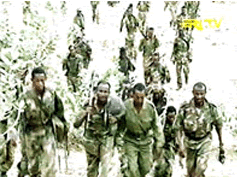
Ten Ethiopian soldiers defected to Eritrea
Asmara
In continuation of the escalating uprising within the Ethiopian Army, tens of Ethiopian soldiers including captains and middle rank commanders recently arrived in Eritrea.
The Ethiopian soldiers led by Captains Bededa Regassa and Negesso Watyo said that the uprising is spreading to different corners of the country.
In a related report, students and youths opposition to the TPLF regime in Jimma town is gaining momentum.
It is to be recalled that Brig. General Kemal Gelchu and tens of other Army commanders, including colonels and hundreds of soldiers safely arrived in Eritrea along with their full logistics, communication equipments and military hardware.
Read more!
AsmaraIn continuation of the escalating uprising within the Ethiopian Army, tens of Ethiopian soldiers including captains and middle rank commanders recently arrived in Eritrea.
The Ethiopian soldiers led by Captains Bededa Regassa and Negesso Watyo said that the uprising is spreading to different corners of the country.
In a related report, students and youths opposition to the TPLF regime in Jimma town is gaining momentum.
It is to be recalled that Brig. General Kemal Gelchu and tens of other Army commanders, including colonels and hundreds of soldiers safely arrived in Eritrea along with their full logistics, communication equipments and military hardware. Read more!
Dr Birhanu’s Book Coming to Light in Ethiopia
Source: adebabay
The distribution of “ YENETSANET GOHE SIKED” is well under way. Close sources confirmed that 10,000 copies are already distributed under ground. Reliable sources informed this bloger that the Woyane security is frustrated to disrupt the distribution of the book. Instead, according to my source, the security is focusing on identifying individuals organizing the main channels of distribution and what is their link with CUDP and Dr Birhanu. some individuals and organization are already identified and security personeels are watching closely.Pls those involving take care!
So far only one local newspaper report about the book i.e. Addis Admas in its Saturday issue. The famous Reporter gave few lines in its English version on same day. But the Amharic Reporter couldn’t dare to report. Yet I have confirmed that the book reached the Reporter.
Many discussion groups are already organized and I had the chance to attend one group yesterday.
Read more!
The distribution of “ YENETSANET GOHE SIKED” is well under way. Close sources confirmed that 10,000 copies are already distributed under ground. Reliable sources informed this bloger that the Woyane security is frustrated to disrupt the distribution of the book. Instead, according to my source, the security is focusing on identifying individuals organizing the main channels of distribution and what is their link with CUDP and Dr Birhanu. some individuals and organization are already identified and security personeels are watching closely.Pls those involving take care!
So far only one local newspaper report about the book i.e. Addis Admas in its Saturday issue. The famous Reporter gave few lines in its English version on same day. But the Amharic Reporter couldn’t dare to report. Yet I have confirmed that the book reached the Reporter.
Many discussion groups are already organized and I had the chance to attend one group yesterday. Read more!
Author : Birhanu Nega ; Obsessed with his BOOK : Ethiopians
Source: adebabay
Birhanu's new bestseller is becoming a matter of 'must-read' for many. As the distribution is partially went on under ground (some how it is available among few vendors) a number of nicknames is given. The most amazing I heard yesterday is YEHABESH MEDEHANIT! What a Medhanit? Some venders are even calling the book by this name. If you are in Addis and hear any call by this name it means the book is available around, may for 80 or 100 birr. The other name is 'THE BIBLE'. I found some friends calling me and asked " can you pls find 2 Bibles for me?" I hope I can!!!!!!!!!!!!!
The other name is "KININ.(tablet)" Why not? The book practically heals many wounds!
Another related story is that a guy living in one major town binds the book cover and wrote on the cover a new title and author " NEGERE MELEKOT- By Deacon Firdu Zegeye." What a title and author name?
While the distribution of The Book continues a critical shortage is reported in Mekele, Bahir Dar, Jimma and Gondar. According to close sources these towns have received only few copies of the book.
A reader in my page requested discussion groups to give him their address and so that he can provide them The BOOK free. I appreciate your offer and contacted few groups. But for obvious reasons they hesitate to accept it right now. When the right time comes I hope you will get some of them.
I will be back with the ramifications of Vicki's new diplomatic endeavor and more reflections on The Book.
Read more!
Birhanu's new bestseller is becoming a matter of 'must-read' for many. As the distribution is partially went on under ground (some how it is available among few vendors) a number of nicknames is given. The most amazing I heard yesterday is YEHABESH MEDEHANIT! What a Medhanit? Some venders are even calling the book by this name. If you are in Addis and hear any call by this name it means the book is available around, may for 80 or 100 birr. The other name is 'THE BIBLE'. I found some friends calling me and asked " can you pls find 2 Bibles for me?" I hope I can!!!!!!!!!!!!!
The other name is "KININ.(tablet)" Why not? The book practically heals many wounds!
Another related story is that a guy living in one major town binds the book cover and wrote on the cover a new title and author " NEGERE MELEKOT- By Deacon Firdu Zegeye." What a title and author name?
While the distribution of The Book continues a critical shortage is reported in Mekele, Bahir Dar, Jimma and Gondar. According to close sources these towns have received only few copies of the book.
A reader in my page requested discussion groups to give him their address and so that he can provide them The BOOK free. I appreciate your offer and contacted few groups. But for obvious reasons they hesitate to accept it right now. When the right time comes I hope you will get some of them.
I will be back with the ramifications of Vicki's new diplomatic endeavor and more reflections on The Book. Read more!
The defection of the General and officers is causing a stir in the Army
Source: Ethio-Zagol
The defection of officers and rank and file members is causing a stir in the Army. TPLF cadres called a meeting of officers Yesterday. The meeting was held at "Arategna Kifle Tor Gibe" where two days ago, leaflets were circulating calling Army members to follow General Kemal. The cadres raised four issues which revealed the desperation of TPLF.
1-Blocking Eritrea TV and radio
The cadres told the officers that it is the ER media that is causing dissension within the army and it has to be dealt with. Some army officers opposed the suggestion claiming that the Dergue had tried to do the same and had failed.
2-Those who defected were corrupt army officers
The cadres wanted to put a spin to the defections.
3-Being watchful of those who circulate leaflets which call for dissensions and
defections within the army.
According to some army officers who attended the meeting the leaflets which were massively distributed at "Arategna Kifle Tor gibe" had shocked the army intelligence.
4-The army should respect the dressing code and discipline.
This was suggested as a way of guarding against those who distributed flyers posing as civilian workers within the army.The meeting was concluded without concrete decisions.
Read more!
The defection of officers and rank and file members is causing a stir in the Army. TPLF cadres called a meeting of officers Yesterday. The meeting was held at "Arategna Kifle Tor Gibe" where two days ago, leaflets were circulating calling Army members to follow General Kemal. The cadres raised four issues which revealed the desperation of TPLF.
1-Blocking Eritrea TV and radioThe cadres told the officers that it is the ER media that is causing dissension within the army and it has to be dealt with. Some army officers opposed the suggestion claiming that the Dergue had tried to do the same and had failed.
2-Those who defected were corrupt army officersThe cadres wanted to put a spin to the defections.
3-Being watchful of those who circulate leaflets which call for dissensions andAccording to some army officers who attended the meeting the leaflets which were massively distributed at "Arategna Kifle Tor gibe" had shocked the army intelligence.
defections within the army.
4-The army should respect the dressing code and discipline.This was suggested as a way of guarding against those who distributed flyers posing as civilian workers within the army.The meeting was concluded without concrete decisions. Read more!
A further blow for a beleaguered leader, Meles Zenawi
The Economist
ETHIOPIA'S prime minister, Meles Zenawi, now spends most of his time heading off his enemies. In the capital, Addis Ababa, the government's response to its defeat in last year's contested general election was to shoot scores of opposition protesters and imprison the city's elected mayor. This led to the suspension of aid from his previously loyal Western backers.
To the south, in the Ogaden desert, he has been fighting with the Ogaden National Liberation Front (ONLF), a rebel group that seeks autonomy for south-eastern Ethiopia. On August 11th Ethiopia reported having shot dead 13 ONLF fighters slipping across the desert from Somalia. Ethiopia's recent military incursion into Somalia in defence of the Transitional Government in Baidoa threatens imminent conflict there against Islamist militias based in the capital, Mogadishu.
On top of this comes the distinct possibility of a conflict with Ethiopia's arch-enemy Eritrea in the north, where perhaps as many as half of Eritrea's young men are massed under arms on its side of the disputed border.
Eritrea's increasingly totalitarian regime has become a regional menace; its foreign policy now appears to comprise nothing more than to support any enemy of Ethiopia's, no matter the cost. On August 8th Eritrea announced its biggest coup to date; a brigadier-general heading the 18th division of the Ethiopian army defected to Eritrea with several ranking officers, hundreds of soldiers, and plenty of weapons.
The general, Kemal Gelchu, was an ethnic Oromo. Probably as many as half of Ethiopians are Oromo, a good number of them Muslim. According to the government's system of ethnic federalism, the Oromos are meant to have a large stake in power. In reality, they are weak and neglected, just as they have always been. A few support the Oromo Liberation Front (OLF)—another rebel group seeking a “fairer” Ethiopia, meaning a shift of power from Mr Zenawi and his fellow Tigrayans, who account for, at most, 7% of the population, but who have dominated the government and the economy since taking power in 1991.
Mr Gelchu's defection puts a face to the deep unhappiness in the non-Tigrayan bits of Ethiopia. He and his men will now undoubtedly join the OLF and fight the Ethiopian government. Force is the only language the government understands, Mr Gelchu says. Alas, force may be exactly what Mr Zenawi is going to get, and on many fronts.
Read more!
ETHIOPIA'S prime minister, Meles Zenawi, now spends most of his time heading off his enemies. In the capital, Addis Ababa, the government's response to its defeat in last year's contested general election was to shoot scores of opposition protesters and imprison the city's elected mayor. This led to the suspension of aid from his previously loyal Western backers.
To the south, in the Ogaden desert, he has been fighting with the Ogaden National Liberation Front (ONLF), a rebel group that seeks autonomy for south-eastern Ethiopia. On August 11th Ethiopia reported having shot dead 13 ONLF fighters slipping across the desert from Somalia. Ethiopia's recent military incursion into Somalia in defence of the Transitional Government in Baidoa threatens imminent conflict there against Islamist militias based in the capital, Mogadishu.
On top of this comes the distinct possibility of a conflict with Ethiopia's arch-enemy Eritrea in the north, where perhaps as many as half of Eritrea's young men are massed under arms on its side of the disputed border.
Eritrea's increasingly totalitarian regime has become a regional menace; its foreign policy now appears to comprise nothing more than to support any enemy of Ethiopia's, no matter the cost. On August 8th Eritrea announced its biggest coup to date; a brigadier-general heading the 18th division of the Ethiopian army defected to Eritrea with several ranking officers, hundreds of soldiers, and plenty of weapons.
The general, Kemal Gelchu, was an ethnic Oromo. Probably as many as half of Ethiopians are Oromo, a good number of them Muslim. According to the government's system of ethnic federalism, the Oromos are meant to have a large stake in power. In reality, they are weak and neglected, just as they have always been. A few support the Oromo Liberation Front (OLF)—another rebel group seeking a “fairer” Ethiopia, meaning a shift of power from Mr Zenawi and his fellow Tigrayans, who account for, at most, 7% of the population, but who have dominated the government and the economy since taking power in 1991.
Mr Gelchu's defection puts a face to the deep unhappiness in the non-Tigrayan bits of Ethiopia. He and his men will now undoubtedly join the OLF and fight the Ethiopian government. Force is the only language the government understands, Mr Gelchu says. Alas, force may be exactly what Mr Zenawi is going to get, and on many fronts. Read more!
American Charge d'affairs talked with Birtukan Midekisa
Source: Ethio-Zagol
The American Charge d'affairs is still engaged in reconciliation efforts. According to close sources, she is hoping that the jailed leaders will initiate talks with the government. Prison sources confirmed that she talked with Birtukan Midekisa last Friday and told her in detail about the problems of Somalia and the need to solve internal differences to do away with the threat of "Islamism in the Ethiopia". Birtukan replied that she didn't want to see war with Somalia but Kinijit had no control on the situation.
The Charge d'affaires was adamant that there is a way out for Ethiopia and they should think about starting a reconciliation process. Sources said that the Charge d'affairs is thinking in terms of the Mandela line where he initiated talks with the government while he was in prison. It was reported that the government has shown a gesture of will to the talks but doesn't want to initiate them.
Mrs. Huddlestone had also talked with Dr. Brehanu's wife, Dr. Nardos Minase, about the possibility of talks, according to Embassy sources. Vicki is back to US today and will start a full-fledged effort for the negotiations when she returns to Addis.
The reconciliation efforts by the American representative show that Kinijit, the spirit of the people, can't be sidelined from the Ethiopian political process as the government thought. The excitement in Addis and elsewhere about freedom has not been this high since the November repression with Birhanu's book acting as a catalyst.
Read more!
The American Charge d'affairs is still engaged in reconciliation efforts. According to close sources, she is hoping that the jailed leaders will initiate talks with the government. Prison sources confirmed that she talked with Birtukan Midekisa last Friday and told her in detail about the problems of Somalia and the need to solve internal differences to do away with the threat of "Islamism in the Ethiopia". Birtukan replied that she didn't want to see war with Somalia but Kinijit had no control on the situation.
The Charge d'affaires was adamant that there is a way out for Ethiopia and they should think about starting a reconciliation process. Sources said that the Charge d'affairs is thinking in terms of the Mandela line where he initiated talks with the government while he was in prison. It was reported that the government has shown a gesture of will to the talks but doesn't want to initiate them.
Mrs. Huddlestone had also talked with Dr. Brehanu's wife, Dr. Nardos Minase, about the possibility of talks, according to Embassy sources. Vicki is back to US today and will start a full-fledged effort for the negotiations when she returns to Addis.
The reconciliation efforts by the American representative show that Kinijit, the spirit of the people, can't be sidelined from the Ethiopian political process as the government thought. The excitement in Addis and elsewhere about freedom has not been this high since the November repression with Birhanu's book acting as a catalyst. Read more!
IFJ Urges International Community to Demand Release of 20 Journalists Imprisoned in Ethiopia
The International Federation of Journalists (IFJ) is demanding the release of 20 journalists who have been jailed during the last nine months in Ethiopia for political reasons and called on other world leaders to pressure the Ethiopian government for their release.
Seventeen journalists were arrested during the violent suppression of anti-government riots that followed the November 2005 elections in Ethiopia. The journalists are charged with treason and could face possible death sentences or life imprisonment. The journalists have refused to be defended in court because of the political nature of their arrests and detentions.
“We strongly protest against the blind repression of freedom of expression and demand the immediate and unconditional release of all the journalists held in Ethiopia, since there is no solid evidence against the charges," said Gabriel Baglo, Director of the Africa Office of the IFJ. “The government of Meles Zenawi holds the sad record of the country with the highest number of imprisoned journalists, as well as the country with the largest number of journalists in exile in Africa."
Among the detained journalists is, Serkalem Fasil, who was pregnant when she was arrested and subsequently gave birth in prison. She has yet to receive proper medical attention for herself and for her baby. Fasil’s husband, journalist Eskinder Nega has also languished in prison since November 2005 with other hundreds of political detainees.
Also among the detainees is Abraham Reta, a freelance journalist who was arrested on 24 April 2006 and condemned the same day to one year imprisonment. Two journalists from the public television channel ETV, Shiferraw Insermu and Dhabassa Wakjira, have been in jail since 22 April 2004.
A number of the journalists and political prisoners are suffering from health problems due to the poor prison conditions. According to reports, a significant number of the prisoners were absent from a June 21 court hearing. Prison police stated that the journalists were sick and some of them were hospitalised at the time of the hearing.
Prison sources said that Kaliti prison, where the prisoners are held, is at its worst during the Ethiopian rainy season when wild mice invade the cells to avoid the harsh weather and bring with them contagious diseases. Most of the cells are made of corrugated iron sheets, which are extremely cold when it rains and extremely hot during the dry season.
“The Ethiopian Free Press Journalists Association (EFJA) is completely disbanded; there is no independent media in Ethiopia, as most independents journalists have gone underground and about 100 journalists are in exile, including EFJA President Kifle Mulat,” said the IFJ’s Baglo, who was part of the mission.
"We strongly call on the African Union Chairperson, President Denis Sassou-Nguesso of the Republic of Congo, and the Chairman of the African Union Commission, Alpha Omar Konare, to pressure the Ethiopian government to release all detained journalists unconditionally. We also called on US President George Bush, British Prime Minister Tony Blair, and European Union President José Manuel Barroso who support the Ethiopian government, to make sure that press freedom, freedom of expression, freedom of association and human rights are respected in Ethiopia.”
For further information contact the IFJ: +221 842 01 43
The IFJ represents over 500,000 journalists in more than 110 countries
Read more!
The International Federation of Journalists (IFJ) is demanding the release of 20 journalists who have been jailed during the last nine months in Ethiopia for political reasons and called on other world leaders to pressure the Ethiopian government for their release.Seventeen journalists were arrested during the violent suppression of anti-government riots that followed the November 2005 elections in Ethiopia. The journalists are charged with treason and could face possible death sentences or life imprisonment. The journalists have refused to be defended in court because of the political nature of their arrests and detentions.
“We strongly protest against the blind repression of freedom of expression and demand the immediate and unconditional release of all the journalists held in Ethiopia, since there is no solid evidence against the charges," said Gabriel Baglo, Director of the Africa Office of the IFJ. “The government of Meles Zenawi holds the sad record of the country with the highest number of imprisoned journalists, as well as the country with the largest number of journalists in exile in Africa."
Among the detained journalists is, Serkalem Fasil, who was pregnant when she was arrested and subsequently gave birth in prison. She has yet to receive proper medical attention for herself and for her baby. Fasil’s husband, journalist Eskinder Nega has also languished in prison since November 2005 with other hundreds of political detainees.
Also among the detainees is Abraham Reta, a freelance journalist who was arrested on 24 April 2006 and condemned the same day to one year imprisonment. Two journalists from the public television channel ETV, Shiferraw Insermu and Dhabassa Wakjira, have been in jail since 22 April 2004.
A number of the journalists and political prisoners are suffering from health problems due to the poor prison conditions. According to reports, a significant number of the prisoners were absent from a June 21 court hearing. Prison police stated that the journalists were sick and some of them were hospitalised at the time of the hearing.
Prison sources said that Kaliti prison, where the prisoners are held, is at its worst during the Ethiopian rainy season when wild mice invade the cells to avoid the harsh weather and bring with them contagious diseases. Most of the cells are made of corrugated iron sheets, which are extremely cold when it rains and extremely hot during the dry season.
“The Ethiopian Free Press Journalists Association (EFJA) is completely disbanded; there is no independent media in Ethiopia, as most independents journalists have gone underground and about 100 journalists are in exile, including EFJA President Kifle Mulat,” said the IFJ’s Baglo, who was part of the mission.
"We strongly call on the African Union Chairperson, President Denis Sassou-Nguesso of the Republic of Congo, and the Chairman of the African Union Commission, Alpha Omar Konare, to pressure the Ethiopian government to release all detained journalists unconditionally. We also called on US President George Bush, British Prime Minister Tony Blair, and European Union President José Manuel Barroso who support the Ethiopian government, to make sure that press freedom, freedom of expression, freedom of association and human rights are respected in Ethiopia.”
For further information contact the IFJ: +221 842 01 43
The IFJ represents over 500,000 journalists in more than 110 countries Read more!
Artist Solomon Tekaligne and Negat Radio Reporter Demis Belete have finished their visit to the EPPF Front
Artist Solomon Tekaligne and Negat Radio Reporter Demis Belete have finished their visit to the EPPF Front. This historical journey made by this two patriotic Ethiopians is a turning point for the struggle for peace, unity and democracy in Ethiopia.
The two well-respected artist and reporter will now inform the entire Ethiopian people inside and in the Diaspora about the true facts of EPPF struggle.
Since the only language the Meles Regime understands is force, EPPF request all Ethiopians to stand alongside and support The EPPF Arbegnoch.
EPPF admires the dedication and courage of Artist Solomon Tekaligne and Reporter Demis Belete. Their visit has become a major moral boost for the entire EPPF Arbegnoch.
EPPF Army is still engaging the Weyane soldiers in different parts of the country.
EPPF Information Center.
Read more!
Artist Solomon Tekaligne and Negat Radio Reporter Demis Belete have finished their visit to the EPPF Front. This historical journey made by this two patriotic Ethiopians is a turning point for the struggle for peace, unity and democracy in Ethiopia.The two well-respected artist and reporter will now inform the entire Ethiopian people inside and in the Diaspora about the true facts of EPPF struggle.
Since the only language the Meles Regime understands is force, EPPF request all Ethiopians to stand alongside and support The EPPF Arbegnoch.
EPPF admires the dedication and courage of Artist Solomon Tekaligne and Reporter Demis Belete. Their visit has become a major moral boost for the entire EPPF Arbegnoch.
EPPF Army is still engaging the Weyane soldiers in different parts of the country.
EPPF Information Center. Read more!
“Show Down Anger III” - Muslim Protesters clashed with Police
Source: Negashi weblog
Muslims in Addis have continued to express their anger on the way the government has been handeling their affairs. On the third ”showdown anger” which Muslims has been doing every Friday since the demolition of their Mosque at Arat Killo, Muslim protesters clashed today, 11.08.06, with federal police. Several handreds of Muslims are reported detained and many sustained wounds.
As per their continued action to express the anger following the demolition of Arat Killo mosque, Muslims stage demonstration every Friday. Muslims from all over the city headed today to the site of the demolished Mosque to perform their Friday prayer and then to join the demonstration. However, large number of Federal Police was already deployed. All roads leading to the site were closed and Muslims were prevented from reaching it. This resulted in unintended confrontation [on the part of Muslims] between the faithful and Federal Police.
Witnesses said that there was intense clash at Arat Killo but police managed to divide the crowd. A large number of Muslims mainly students of Addis Ababa University were arrested. Muslims then went to the nearby Mosques to attend the Friday prayer. Chanting Takbir - “Allahu Akbar” - some joined the congregation at “Filwuha” Mosque. Others went to Nur/Bani Mosque and the remaining to Anwar Mosque.
After the prayers particularly at Anwar, believers protested against the action being taken by the government first in demolishing their Mosque and now in denying them their right to express their anger peacefully. Police responded with firing bullets and beaten protesters who had nothing to protect themselves with. As a results a large number of Muslims were wounded, most of them severely. There is also unconfirmed report that two Muslims were shot dead. At least one car that belongs to the Federal Police was made out of use and several others had their windows smashed.
Police arrested several hundreds of Muslims including women and children. Despite a strong rain, the clash at Anwar Mosque continued even after the Asr (late after noon) prayer. Shops in the busy Merkato area remained closed for the whole afternoon. Additional police force was called. The demonstraters then left the Anwar Mosque at around 5:00 pm local time and headed to Teklehaymanot.
Another heavy clash between the demonstrators and Federal Police at a place locally called “Berbere tera” in Merkato and Teklehaymanot led to the arrest of more than 1, 000 Muslims. It is at this stage that the two unconfirmed deaths were reported. City bus and federal Police cars were also burnt.
The exact number of Muslims detained, killed, wounded by during the day long clash is not immediatly known. Witnesses saw Muslims being taken away with several trucks of the Federal Police. Some are held to Arat Killo police station while other were taken to unidentified locations.
Read more!
Muslims in Addis have continued to express their anger on the way the government has been handeling their affairs. On the third ”showdown anger” which Muslims has been doing every Friday since the demolition of their Mosque at Arat Killo, Muslim protesters clashed today, 11.08.06, with federal police. Several handreds of Muslims are reported detained and many sustained wounds.
As per their continued action to express the anger following the demolition of Arat Killo mosque, Muslims stage demonstration every Friday. Muslims from all over the city headed today to the site of the demolished Mosque to perform their Friday prayer and then to join the demonstration. However, large number of Federal Police was already deployed. All roads leading to the site were closed and Muslims were prevented from reaching it. This resulted in unintended confrontation [on the part of Muslims] between the faithful and Federal Police.
Witnesses said that there was intense clash at Arat Killo but police managed to divide the crowd. A large number of Muslims mainly students of Addis Ababa University were arrested. Muslims then went to the nearby Mosques to attend the Friday prayer. Chanting Takbir - “Allahu Akbar” - some joined the congregation at “Filwuha” Mosque. Others went to Nur/Bani Mosque and the remaining to Anwar Mosque.
After the prayers particularly at Anwar, believers protested against the action being taken by the government first in demolishing their Mosque and now in denying them their right to express their anger peacefully. Police responded with firing bullets and beaten protesters who had nothing to protect themselves with. As a results a large number of Muslims were wounded, most of them severely. There is also unconfirmed report that two Muslims were shot dead. At least one car that belongs to the Federal Police was made out of use and several others had their windows smashed.
Police arrested several hundreds of Muslims including women and children. Despite a strong rain, the clash at Anwar Mosque continued even after the Asr (late after noon) prayer. Shops in the busy Merkato area remained closed for the whole afternoon. Additional police force was called. The demonstraters then left the Anwar Mosque at around 5:00 pm local time and headed to Teklehaymanot.
Another heavy clash between the demonstrators and Federal Police at a place locally called “Berbere tera” in Merkato and Teklehaymanot led to the arrest of more than 1, 000 Muslims. It is at this stage that the two unconfirmed deaths were reported. City bus and federal Police cars were also burnt.
The exact number of Muslims detained, killed, wounded by during the day long clash is not immediatly known. Witnesses saw Muslims being taken away with several trucks of the Federal Police. Some are held to Arat Killo police station while other were taken to unidentified locations. Read more!