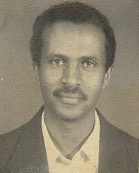
Alemzuria made it to Nairobi, Kenya

Alemzuria Teshome is a 25 years old girl. She is the daughter of Ato Teshome, member of the main opposition party Coalition for Democracy and Unity CUD and a city council elect for Addis Ababa City Administration.In November 2, 2005 security forces who came to detain her father did not get satisfied by capturing her father. They murdered her mother W/ro Etenesh Yimam , 52 years old housewife, for simple reason that she screamed protesting the government forces who raided the family home to arrest her husband .
W/ro Etenesh Yimam, is a mother of four. The children remained motherless. The bullets that were meant for her son hit a neighbor in the stomach and another in the arm. The police arrested W/ro Etenesh Yimam's son and fired at everyone that tried to get in their way. Ato Teshome is still in prison with the other CUD officials.
You have heared Alemzuria Teshomes interview on VOA. After that interview government forces were compelling her to denounce the interview and to sign a paper that says Kinjit (CUD) killed her mother as Alemzuria Teshome said. She was also under constant harassment and intimidation and they tried to lie ludicrous charges on her. She was not able to live her life peacefully. Thus, Alemzuria went in to hiding a few months ago. Finally she made it to Nairobi, Kenya.


Please send emails as soon as you can, we have exactly 24 hr before she goes to the interview
Dear friends this is where we need your help. She is not in safe haven. We have fear that the Weyane security agents might follow and harm her in Nairobi. Alemzuria is currently trying to contact the UNHCR in Kenya. But due to the high number of refugees in Kenya, she may not get the necessary protection quickly.

1 - Send emails to UNHCR office in Kenya stating
Who she is,
What happened to her,
And that she is in danger and she is in need of protection and security now

2- you can send emails to the following addresses.

3 - Kinijit Main office and chapters also send an official letter to UNHCR office in Kenya and Geneve www.unhcr.ca on any one in UN or UNHCR stating the above in #1
Please lets all helps this poor girl. A least we owe her this much for what her family has
sacrificed for Ethiopia. Alemzuria was involved in the struggle for long time as
a volunteer last thing she was doing was volunteer clerk in Kinjit office in Addis.

Source: www.kinijit.org/

Read more!

posted by Ethiounited Moderator at7:18 PM
0 comments

Detained Ethiopian opposition leader admitted to hospital

Ato Hailu Shawel, Chairman of the Ethiopian opposition Kinijit for Unity and Democracy Party (CUDP) which is the major opposition in Ethiopia, has been admitted to hospital today around 9:00 in the morning.
According to a press statement of Kinijit International Leadership Office, he has been taken to the Hospital from his Kality prison cell. His sugar level fluctuates from dropping to 40 and going up to 250-260.
He is now at the police hospital and is being monitored. Severe restriction of movement and exercise at the prison might have caused this problem. Members of the family are at the hospital trying to visit him, the CUDP said.
In related development, Ato Hailu has always been denied access to meet the international community visitors who come to prison for either fact finding mission or to analyze the situation of the prisoners. Three incidents can be cited here, the day Louis Michel visited the prisoners Ato Hailu was taken to hospital deliberately while he put his request long before that day. Fortunately, he insisted to go back to prison and was able to see him just before he left.
The Irish foreign Minister is another case where Hailu was taken to hospital, yesterday when Congressman Donald Payne went to visit the defendants again Hailu was taken to Hospital. Although Hailu was back from hospital around 11:00, the authorities told Payne that he is still in hospital.
The leader of Ethiopian opposition is detained since November 2005. Opposition leaders and newspaper editors under detention face treason charges, which carries the death penalty in Ethiopia, for their alleged roles in November unrest in which at least 46 people were killed.

(ST)
Read more!

posted by Ethiounited Moderator at6:59 PM
0 comments

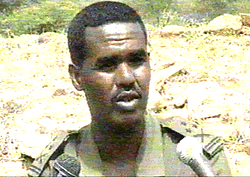
Ethiopian general defects to Eritrea

An Ethiopian general has defected to his country’s bitter rival, neighboring Eritrea, an official said Wednesday.
Brig. Gen. Kemal Geltu, who was the commander of the 18th army division, left because he was opposed to military reforms, said the Defense Ministry official.
Kemal’s defection was first announced late Tuesday on state-owned Ethiopian TV.
Eritrea confirmed the arrival of the Ethiopian general. The website of Information Ministry, which normally advertises such defections said will conduct shortly an interview with the Ethiopian general and other senior army commanders who arrived with him.
Eritrea gained independence from Ethiopia in 1993 after a 30-year guerrilla war, but their border was never settled. They fought a 2 1/2-year war that ended in December 2000 when both countries signed a peace deal, allowing an independent commission to determine their border.
Ethiopia refused to implement the international commission’s 2002 ruling. Eritrea has accused the international community of shirking its responsibility to ensure the ruling is obeyed.
The border, while still not demarcated, has been peaceful since the 2000 truce, but tensions have occasionally flared to the point international observers feared a new war could break out.

(AP/ST)
Read more!

posted by Ethiounited Moderator at6:58 PM
0 comments

Brig. General Kemal Gelchi and other senior Ethiopian Army commanders arrive in Eritrea

At a time when the TPLF regime, denying the Ethiopian people the right to equality and democracy, suppressing the struggle of opposition organizations and failing to honor the outcome of the popular election and desperately trying to prolong its stay in power on the one hand, and at a time when the OLF and other opposition organizations are strengthening their resistance by forming the Alliance for Freedom and Democracy on the other, the Ethiopian people’s popular uprising is gaining momentum.
Accordingly, in continuation of the aforementioned mass opposition inside the country and abroad, massive uprising is equally being witnessed within the ranks of the Ethiopian Armed Forces.
As a vivid demonstration of these developments, Brig. General Kemal Gelchi, senior commander of the enemy force deployed along the Tikul-Adi Teklai front, and tens of other army commanders including colonels together with hundreds of soldiers safely arrived in Eritrea at dawn today, August 9 along with their full logistics, communication equipments and military hardware.
Moreover, security sources disclosed that besides these developments that occurred around the surroundings of Badme in the Eritrean border, hundreds of Ethiopian soldiers and tens of their commanders are also joining opposition groups in eastern and western Ethiopia.
Latest reports further indicated that the number of Ethiopian soldiers arriving in Eritrea and other areas is on the rise.
Read more!

posted by Ethiounited Moderator at6:51 PM
0 comments

Birhanu Nega writes a book; a book that rekindles the kinijit spirit


Source: Ethio-Zagol
Publisher: Andargachew Tsgie
Printing house: MM publishing
Kaliti jail is notoriously hot in the summer. With an average of more than 100 people crammed in one room, it is hard to breath. Prisoners spend most of their times outside their cells to avoid the stifling heat inside. For five months since he was taken to one of the worst cells in Kaliti, unlike most of his cell mates Birhanu Nega spent his time inside the cell writing. It wasn't a letter or a diary he was writing. It was a book.
How the book manuscript made it outside the cell and to kampla for publishing is amazing. it shows the nature of the struggle and the number of people involved in it. The story of the process of writing is, however, fascinating. Security guards twice took away some parts of the manuscript. He wrote them again.
The book itself which was titled "Yenetsanet Goh Siked: Likelebes yetemokerew ye'Ethiopia democracy" is 618 pages long and has four parts. Birhanu briefly takes us the formation of his early political life in the first part. He then lays a case for liberal democracy in Ethiopia and the problems of building democracy. The second part tries to answer what makes the election last year so special. He goes through the politics of EPRDF and opposition before the election. In the third part he recounts the events post election, until the November repression and their imprisonment. The last part takes on EPRDF's misguided calculations and the future of Ethiopia.
The book is one of the most fascinating accounts of an Ethiopian politician and a political philosophy he and fellow courageous leaders in prison share. It is emotionally involving with some extraordinary tales. One will come out with enormous moral burden after reading the book. It is a must read.
Read more!

posted by Ethiounited Moderator at12:47 AM
0 comments

A list of 308 people that were murdered by Meles Zenawi Army

In one of my previous posts I have published the names of some 27 people who were brutally murdered by the TPLF dictatorial regime. The TPLF has been killing innocent people and those that oppsed since it first set its foot in the lands of Wolqait-Tegede in the 1970. Since then hundreds up on hundreds of people have bean massacared. This ruthles regime has murdered young and old, men and women with out mercy. God know how many more have just banished and no one knows their whereabout until now. Thousands more are still languishing in secret underground prisons just for being Wolqaites and for opposing its dictatorial, ruthless regime.

A recent article headlined, "Can Meles Fight Corruption?" indicates that there are more than 40,000 people incarcerated in the Tigray region alone. It also states that the TPLF has built a prison that can hold upto 50,000 inmates in Shire, Western Tigary. Clearly, the reason for building such a prison in Shire is no other than to be close to Wolqait and to continue repressing the people.

Here is a list of 308 people that were murdered by TPLF that I manage to collect from various reliable sources. It is very sad these are only few of the hundreds if not thousands that were killed by TPLF.


First NameMiddle Name

First NameMiddle Name
1Abate Eshetey
45AsamerewAsrese
2AbawTejineh
46AsamerewWoldie
3AbebeYirga
47AsefawMengiste
4AbejeKifle
48AseresTakele
5AberaHaile
49AsfawWorku
6AberaAlemayehu
50AsgedomTiruneh
7AberaG/Meskel
51AshenafiWondu
8AberaAsires
52AsimelashYigzaw
9AberaHagos
53AtalayAbera
10AbrehaAdane
54AtalayZenebe
11AbrehaArgu
55AtalayAmare
12AbrehaNega
56AtinafeyAlemayehu
13AbrehaBelay
57AwekeZewdu
14AchamyelehShitaye
58AyahunegnWondoshal
15AchenafiTsige
59AyalewSemu
16AdaneDerese
60AyanaGebre
17AdanewRiste
61

18AddisAbetelew
62AyenewReste
19AddisuAbebe
63AyenewBeyene
20AdebeAlem
64AzanawChere
21AderajewGebre
65AzanawYideg
22AdiseyLijalem
66AzanawTsige
23AlachewLijalem
67AzenehLijalem
24AlachewG/Medhin
68BahitaFantay
25AlebachewDefersha
69BahitaMekuria
26AlebelYirga
70BahitaWondimagegn
27AlehegnMesfin
71BahitaReda
28AlemawTareke
72BahitaErtib
29AlemeyKassa
73BahitaMengistu
30AlemuGetachew
74BayewBahita
31AlemuFentay
75BayewBiyaregilign
32AlemuLegesse
76BayewLijalem
33AleneKindishih
77BeEduWondimagegn
34AmareFante
78BelayMulu
35AmbayehuAbetelew
79BelayTadesse
36AndomKassa
80BelayMekonen
37AngerebTesema
81BeleteAlem-Mebirat
38ArefaynieMekonen
82BeletewTesfay
39ArefeBelete
83BelteWondimagegn
40ArefeGidey
84BeraYemane
41AregaWoldie
85BeraW/Selassie
42AregawAyenew
86BerheHagos
43AsamerewGidey
87BerihunYirga
44AsamerewMelese


First NameMiddle Name

First NameMiddle Name
88BerihunYigzaw
131G/SelasseiReda
89BerihunDesta
132GebreHagos
90BeyeneFirey
133GebrehiwotHayile
91BeyeneAyelign
134GeremewDagnew
92BiadgilignZewde
135GerimaTekhley
93BilataAbiraha
136GetachewTegegne
94BirhaneMamo
137GetachewBizuneh
95BirhanuDagnachew
138GetachewAbreha
96BirhanuShitaye
139GetewTamre
97ChakileGebeyehu
140GetuTelelew
98ChalachewTadesse
141GideyMamu
99ChalachewAbere
142GideyKassa
100ChalachewTadele
143GifachewDagnew
101ChaluYezezew
144GinbyGetahun
102CheneYirga
145WoldieYenehun
103DagnewSisay
146GirmaYideg
104DebililZenebe
147GirmayTikus
105DeblilT/Haimanot
148GirmayTike
106DegefaGoitom
149GoitomMihret
107DesalegnWarkaw
150GoitomHadgu
108DestaSeretse
151GorfuGebru
109DirarGessessew
152GoshuAssefa
110EndalkachewTejo
153GoshuTirfineh
111EndeshawTafere
154GubenFiahatsen
112EngteyAyelegn
155GuoyMebirahtu
113ErtbeyGebru
156GuoyAdane
114EsheteAyalneh
157HabtuYirga
115EshetuMesfin
158HafteZenebe
116FantayAyelegn
159HagosGebrey
117FantuSisay
160HagosMengistu
118FelekeGirmay
161HagosYisfa
119FeredeZeray
162HailuLeyuneh
120FeredeFiluy
163HayelomYirga
121FeteneZenebe
164KahisuNigus
122FeteneGebrey
165KahsuGetaw
123FireyTwolde
166KasahunSisay
124FtalewTafere
167KassaMebirat
125G/HiwotBahita
168KassahunSissay
126G/HiwotGezahegn
169KassuNigussie
127G/MariamArefayine
170SisayAbera
128G/MedhinZerfu
171KeseteYirga
129G/MedhinYehuala
172KinfeKebede
130G/MeskelTirfineh
173KinfeNahu


First NameMiddle Name

First NameMiddle Name
174KinfeKebede
217MulunehDemoze
175LemaTadesse
218NegaTebeje
176LeulG/Meskel
219NegaAseres
177LijalemTaye
220NegaGetahun
178LijalemBelay
221NegaMitiku
179LilayHadgu
222NegaHagos
180LuleMesfin
223NegaBebel
181MalefiaGuoy
224NigshetHadgu
182MalleZenebe
225NigussieKelemework
183MamayRedate
226NigusuAbreha
184MamayAbirha
227Pastor BeleteTesfay
185MamayBelay
228QuwiTezera
186MamayAyelegn
229RedaiLema
187MamayMulu
230RiskeyHaile
188MamayFerede
231RiskeyMintesinot
189MamayAleyu
232RiskeyYilma
190MamayBelayneh
233RiskeyMelese
191MamoDesta
234RoskeyManjos
192MamoZewdie
235SerebeReda
193MamuWarkaw
236SetegnEndalemaw
194MamuChere
237SetegnShitaye
195MamuTadesse
238ShenqoBelete
196MamunehYideg
239ShiferawWubeneh
197MebirahtuYigzaw
240ShiferawNigussie
198MebirahtuG/Ezgher
241ShiferawTesfay
199MehariAdugna
242ShihunKidane
200MekonenLewte
243ShimuyeMamu
201MekonenAbere
244ShimuyeAlemey
202MekuanintWarkaw
245ShimuyeDemisew
203MekuriaG/Mariam
246SimachewMamu
204MengeshaMulugeta
247SimachewAlemu
205MeredG/Mikael
248SissayTesfahunegn
206MesafinteDagnew
249TadeleAbate
207MirachTesema
250TadesseKeshi
208MolaTelele
251TafereLilay
209Mrs. LiEltiWondimagegn
252TagelTedla
210MukoteyTadesse
253TalleGebre
211MulalemWarkaw
254TasewAsefa
212MulawZofe
255TebejeMelese
213MuluAtalay
256TebejeBekele
214MuluAmare
257TegegneNega
215MuluBerhe
258TegegneDemis
216MuluG/Kidan
259TekalignAbebe


First NameMiddle Name


260TekalignMengistu


261TelaHaile


262TesfaTsegay


263TesfayHailu


264TesfayAberiha


265TesfayMekonen


266TesfayAsfeha


267TeshagerG/Medhin


268TeshomeFerede


269TeshomeTelele


270TessemaAbkhelew


271TessemaFireye


272TigabuMekuanint


273TilahunTewolde


274TirunehTadesse


275TirunehMebratu


276TogaTegegne


277TsegayAbebe


278TsegayYenehun


279TseguZenebe


280TsyiteyAbirha


281WagnewMenberu


282WegahtayBicha


283WeretaGebru


284WoldieYeEbiyo


285WoldieYenehun*


286WondimFisseha


287WondimTelele


288WondimTega


289WondimhunegnTareke


290WorkeyG/Medhin


291WorknehAtalay


292YehualashetZeleke


293YeshalemBerihun


294YeshialemTsige


295YeshinehYideg


296YezezewG/Meskel


297YibeyinG/Ezgiher


298YidegAyenew


299YidegAyalew


300YilaqTezera


301YirgaDemisew


302YisfaFantay


303ZelekeGirmay


304ZerayMersha


305ZeruBelay


306ZeruMersha


307ZewdieSisay


308ZewduShibeshi


source: www.ethio-wolqait.blogspot.com
Read more!

posted by Ethiounited Moderator at12:32 AM
0 comments

City Declares War On Meles Zenawi

Dear Readers,
The Good Intentions Paving Co. wrapped up its most current roadwork project at the July 31 city council meeting. The intentions used in this work were the finest: outreach to the city’s Ethiopian-immigrant community and service to human rights and democracy. The workers laying the pavement were the city councilmembers themselves. The road led to a simple resolution in favor of US House Bill 5680, which calls for human rights and democracy in Ethiopia. It was intended to be a quick and quiet sidetrip from the usual business of the city council.
In case you do not follow the news from Ethiopia, dear Readers, the current regime is currently in favor of rights - it’s own - over those of the dead and imprisoned bodies of its opposition.
The resolution was introduced by councilmember Terry Seamens, whose heart is always in the right place, though in this instance his heart was in a cab on the way to the right place, but the cab driver took a meandering route and got lost in a bad neighborhood - all the time describing the terrible things happening in his home country.
It was one of those quick “courtesy” resolutions, the sort of thing the city likes to do to buff the shine on its reputation. A few Ethiopian immigrants showed up during the resolution’s phases: the introduction, the first hearing, and the second hearing, and they expressed gratitude to the city, to the United States, and democracy. It was a scene Norman Rockwell might have painted and titled “First Taste of Free Speech”, as these folks stood before the council and in sometimes halting English described the terrible things happening in their home country.
Your Gilbert got the impression the council members were thinking that, sure, this was taking a few moments out of their already tedious meeting schedule, but it was a worthy cause and they were a little touched by it all, and even a bit proud of themselves. Council eyes were misty.
Then came the July 31 council session, the final vote on the resolution, and the audience was PACKED, dear Readers! It seems not all Ethiopian immigrants agree on this issue. Some of them think the government back home is getting a bum rap. As speaker after speaker arose to make pretty much the same points and counterpoints over and over it began to look as if this particular road of good intentions was headed straight for Meeting Hell. The councilmembers’ misty eyes took on a more steely glint. The mayor, with increasing sternness, appealed a number of times to the crowd to refrain from repeating what previous speakers had already said.
The crowd was slow to take the hint. Your Gilbert supposes there are not many public venues in America to discuss Ethiopian politics, so these people, bless them, had driven in from all over the region to say their piece and that’s just what they were going to do, by gawd, even if the nice lady at the front of the room who kept glancing at the clock felt she had to say something-or-other in between their speeches.
Finally, however, the hint was taken and crowd ceased speechifying to the council. Instead they started speechifying to each other. Eventually, they took the loud discussion outside because that lady kept interrupting them and she wasn’t being quite so nice any more. Strange Americans, they act like they are your friends, then they act irritated at you for no reason at all.
The resolution did pass, by the way.
- Gilbert
Read more!

posted by Ethiounited Moderator at12:12 AM
0 comments

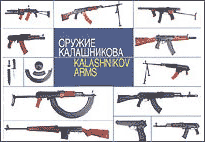
Amnesty International concerned about Czech arms export to Ethiopia

Prague, Aug 3 (CTK) - Amnesty International of the Czech Republic (AI CR) today criticised the export of Czech arms to Ethiopia, Angola, Nigeria, Colombia and Saudi Arabia as the armed forces of these countries killed civilians last year.
AICR is also concerned about the arms deals with China on which an EU embargo had been imposed and with Syria, the AICR report said.
The report said that firearms for hunting, leisure time and self-defence had ended up in China.
"Some countries to which Czech arms were delivered are a source of serious concern," the report said in reaction to the Czech annual report about arms trade in 2005.
Foreign Minister Cyril Svoboda (the Christian Democrats, KDU-CSL) said on Wednesday that the Czech Republic respected international agreements and controlled the exports.
According to the report, Czech authorities rejected nine cases of requests for arms export last year. It happened in the case of Georgia, Liberia and Malaysia and six times in the case of Congo, said the report, published at the Foreign Ministry's webpage www.mzv.cz.
On the other hand, a positive response was given to 1471 requests, the highest number since 1999.
Amnesty International expert Filip Karel said that Ethiopian authorities unfairly detained opposition leaders and soldiers had killed tens of demonstrators last year.
"Besides, civilians are killed arbitrarily in the regions near Somalia. There is also the threat that this country will be involved in the fighting in Somalia," AI said
.
In Colombia, security forces were involved in out-of-court executions of civilians, AI said. "Besides, through arms deliveries they support armed para-military units that are involved in the killing of civilians," AI said.
In Nigeria, the local armed forces mercilessly killed villagers who protested against the impact of petrol mining, the report said.
"The large amount of weapons in Nigeria contributes to widespread violence," AI said.
In Syria, there is the threat that the weapons can be delivered to armed terrorists, Amnesty International of the Czech Republic stressed.
The Czech Republic imports more arms than it exports, Industry and Trade Minister Milan Urban told journalists on Wednesday.
The Czech Republic used to rank among top arms exporters, Urban said, adding that there was no reason why the country could not return to this while respecting all international agreements.
However, Urban gave no concrete figures.
Last year, ammunition took up around a quarter of Czech arms production, followed by guns and gun systems.
The biggest buyer with nearly 37 percent was the Defence Ministry. Almost 40 percent of last year's output was exported, most of all aircraft technology, guns and gun systems.
Czech arms production continues falling for the fourth year in a row. Last year, the 26 largest companies in the field, which hold over 90 percent of the market, produced arms technology for 84 billion crowns. This means a fall by nearly 22 percent, Jaromir Culek of the Industry and Trade Ministry said last week.
(USD1=22.246 crowns)
Read more!

posted by Ethiounited Moderator at11:48 PM
0 comments

Injustice on political prisoners in Ethiopia

Ethio-Zagol
Suffering of the political prisoners is getting worse and worse. Journalist Eskinder Nega and CUD council member Andualem Arage are taken to Kerche where they are confined to a narrow 3x3 cell without light. They are allowed to have 30 minutes a day for sanitation. They aren't allowed to go to the toilet even when they are sick forcing them to use the cell for sanitation as well. Both of them weren't told why they are put in such disgusting cell. The court which heard the complaint of both on the Friday decided to have a two months recess without making a ruling on the complaint.
Required action:
Call or write to shimeles Kemal, the chief prosecutor and tell him to stop the injustice against the political prisoners. Leave a message in case you can't contact him. Be very polite in your communication. The objective is to make him feel what he is doing is inhumane and degrading.
Mobile phone no: 0911238410
Fixed Line: 0115515099/0115514750 / 0115159287
e-mail:shekemal@yahoo.com

Source: http://www.seminawork.blogspot.com/
Read more!

posted by Ethiounited Moderator at10:48 PM
0 comments

Ethiopia: A year after the elections

Erkyihun Lagere
It’s more than a year since the May 2005 Ethiopian elections collapsed in chaos, resulting in violence, arrests, imprisonments and a press crackdown. How can the country move forward towards elections in 2010? Now is the time for the government to dodge the election trends of other African governments. Now is the time for dialogue and tolerance, writes Erkyihun Lagere. Only if this happens can Ethiopia truly fulfill is reputation as a mosaic culture.
The parliamentary election in Ethiopia in May 2005 was unique in Ethiopian history, and can be compared to the South African elections of 1994 where all South Africans, after 40 years of segregation, went to the polling stations and queued for hours to exercise their democratic rights and put in place a Government of National Unity. It was the first in Ethiopia’s history, especially in a multi party platform, where Ethiopians became aware of and exercised their power to elect their legislators and form a government. Politicians consented not to use the barrel of the gun to access power. It was this sense of assurance that encouraged eligible Ethiopians to go to the polling stations and exercise their newly found democratic rights.
During the Communist regime, the process was manipulated, votes were rigged and members of the communist party were declared the winners at any cost. After the overthrow of the Communist Derg regime in 1991 by the Ethiopian Peoples Revolutionary Democratic Front’s (EPRDF) armed insurgency, the EPRDF’s Meles Zenawi reorganized Ethiopia’s regions along ethnic lines and constructed a political machine that has dominated Ethiopian politics for the past 15 years. Despite widespread opposition to this system among a number of ethnic groups in Ethiopia, the EPRDF and Zenawi had been able to maintain their power. However the existence of a better organized, united opposition combined with an energized electorate strongly contributed to the hope that surrounded the 2005 elections.

The May 2005 Ethiopian Elections

The May 2005 elections drew the attention of Ethiopians at home, the diaspora, and even the international community. It was the first time in Ethiopian history where the incumbent government provided facilities, gave access to government owned media and allowed the opposition to campaign “freely”. While the incumbents still enjoyed some advantages, the pre-election processes were nevertheless unprecedented in several ways:

1. It was the first [1] election that took place in a multi-party platform. According to the Associated Press, it was “the most competitive election in the country’s 3,000 year history” [2].
2. There was an open debate (discussion) in the media between the incumbent and opposition political parties.
3. All political parties condemned violence and requested their supporters to go to the polling stations and cast their vote.
4. The four major parties signed a non-violence pact.
5. It was the first election in Ethiopian history where Ethiopians went to the polls believing that they could cast votes and elect a government of their choice.
6. It was a practical demonstration of attempts to accommodate the interests of opposition political parties. The hope was perhaps best captured by Desalegn Rahamato from the Forum for Social Studies who was quoted saying: “We do not expect a miracle, certainly nobody expects the government to lose but we are hoping that the composition of parliament will change substantially so there will be more opposition.” [3]

What went wrong?

The Prime Minister’s premature announcement of EPRDF’s overwhelming victory [4] was the beginning of the rift in the political process, which subsequently led to allegations and counter allegations that increased the gap between opposition political parties and EPRDF [5]. This premature announcement challenged the power of the National Electoral Board of Ethiopia (NEBE) which was the only institution empowered to declare the election results.
The NEBE’s inability to intervene immediately to stop the incursion increased dissent, led to civil violence and forced the residents of Addis Ababa to demonstrate and express their dissatisfaction with the handling of the election results. Although the incumbent government claimed that the opposition political parties instigated and backed the civil violence – the government’s violent suppression of demonstrations also escalated and triggered more violence.
The incumbent government breached the non-violence agreement signed before the election, and violated the people’s constitutional right to peaceful demonstration and gathering. Even worse, mass arrests of students, innocent civilians and leaders of the opposition were carried out. Some of the imprisoned opposition leaders had won Parliamentary seats even in the rigged election.
The derailment of the democratic processes led to the curtailment of press freedom, the arrest of journalists and the closure of private newspapers. Further, it created tension among ethnic groups and sporadic violence in the southern part of Ethiopia that could have been exploited by politicians to orchestrate ethnic violence. In the Diaspora, the consequences were a series of demonstrations, public meetings, vigils, and lobbying of governments and donors to reconsider their relations and restrict development assistance.

Elections in Africa

Was the process in Ethiopia different from other African countries? What are the election trends in Africa? At this junction it would be useful to briefly analyze the election trends within other countries in Africa in order to shed light on the Ethiopian case.
It is a public knowledge that most African elections are marred with fraud and vote rigging. In most cases in Africa, opposition political parties claim victory in major cities while the incumbent governments do so in rural areas. In the post conflict environment of most African countries, an incumbent government rarely wins votes in metropolitan areas. The rationale being that the cities hold the enlightened members of the society (the elites, unionized labor force etc.) who are politically conscious, and rely on the often poorly provided services (water, electricity, health) of the incumbent government.
Further, they are also the immediate victims of government policies, which are designed to attract donors, and the international community to demonstrate governments commitment to good governance. Thus, the perpetually dissatisfied urban electorate demonstrate their anger through huge turn outs at polling stations to vote against the incumbent government that threatens their livelihood; though they know that their vote will not make a huge impact on the overall result. In addition, the presence of the international community and international observers predominantly in urban areas makes it more challenging for the incumbent government to rig votes in cities compared to rural areas.
However, in rural Africa with low literacy rates, difficult living conditions, and well established control mechanisms, the electorate can be coerced, bribed and manipulated to vote for the incumbent. If they vote against an incumbent that stays in power, they will be denied access to fertilizer, insecticide, veterinary care, healthcare and other essential services the government provides. For the sake of survival, the rural communities have to comply with the instructions of government officials. As mentioned earlier, the lack of transportation and hospitality infrastructure limits the number of international or even domestic observes in rural areas, making it easy to rig the vote. As an emerging democracy, Ethiopia is affected by all these factors and it should be no surprise that the incumbent EPRDF claimed victory in rural Ethiopia while losing in the big cities.

The consequences of the May 2005 election

Why did the incumbent government rush to declare its party as a winner? I think it was due to a lack of confidence in its own system. The EPRDF believed that they had won the confidences of the electorate in Addis Ababa and other metropolitan areas which in the end turned out to be woefully wrong. As the election results started to become public in the metropolitan areas the party became increasingly frustrated and insecure.
However, the EPRDF should have been conscious of the elections trend in Africa and been prepared for such an outcome: Robert Mugabe’s party ZANU-PF lost in Harare and Bulawayo, Daniel Arap Moi’s party KANU lost in Kisumu, Nairobi, Nakuru and Naivasha. By rushing to announce the result, EPRDF failed to comply with the guidelines of NEBE and this demonstrated a lack of experience in multi-party politics.
Accepting defeat was difficult and unfamiliar in the culture, and the social and political systems. With the exception of rare cases such as Ghana, Kenya, and Zambia, most incumbents in many African countries have rarely accepted defeat and handed over power to the victorious political party. This highlights a crucial issue in African politics – leaders who come to power using the barrel of the gun do not have the confidence to leave the government mansion willingly and become an “ordinary” citizen.
I can understand their fear. Such leaders, while in power, are not interested in developing a system that could provide them a means that would enable them to live as an ordinary citizen, because they do not want to leave power. It has become fashionable to amend Constitutions, extend terms of office, and stay in power for life. This alienates them from the community and they cannot assimilate back if they leave power because of injustices they committed and unlimited powers they exercised over the people. They are foreigners who would only feel secure living in exile from their homeland usually after a last minute peace deal brokered by a western government.
An important question one should ask is why it was necessary to violate the non-violence pact signed before the 2005 Ethiopian elections where the major political parties agreed “[t]o peacefully resolve our differences or other disagreements between and among ourselves”. [6] Why was it necessary to change a relatively smooth democratic process to a violent event where over 40 people lost their lives, thousands (including leaders of opposition political parties, human right activists and civil society organizations, etc.) ended up in detention camps, and freedom of press was curtailed severely.

Losing the elections in Addis Ababa, where the African Union and some international organizations have their headquarters, was an embarrassment for the EPRDF government. As the parliamentary election results continued to become public formally and informally, it became evident that while some senior government officials including the Minister of Education Genet Zewdae, speaker of the House Ato Dawit Yohannes, etc. lost their parliamentary seats in Addis, still more government officials lost in the regional towns. Thus, the EPRDF government, on the notion of maintaining order and peace in the country, banned public meetings and rallies, intimidated, harassed and retaliated against the electorate who voted against EPRDF, using excessive power and denying the people the right to express their views publicly on the results of the election.

It is worth remembering that retaliation or revenge breeds violence and creates a downward spiral of violence. Ethiopians at home and in the Diaspora witnessed and remember how revenge and retaliation spiraled into violence during the early days of the Marxist regime. Loosely translated, one of the slogans that bred violence was “the blood of one revolutionary can be matched by the blood of a thousand anarchists”. It is thirty years later now and I am sure most Ethiopians remember how the retaliatory chain of violence labeled “Red Terror” and “White Terror” wiped out thousands of young and educated Ethiopians.

More recently, Ethiopians will also recall how the EPRDF, which took power in 1991, used this terror to identify with families of the victims, win trust and confidence of Ethiopians and show the atrocities the Communist government committed against its own people. There is no justification for any group including EPRDF to use revenge (violence) as a means to solve the current problem in Ethiopia.

It has become clear that the legal system is too slow, either due to limited capacity or a lack of good will, to provide remedy for those who seek justice, especially those jailed in connection to the May 2005 elections. As all concerned Ethiopians and the international community continue to advocate for justice, it is a ripe time to plan and discuss how the democratic process should continue in Ethiopia. The parliament has only three years and ten months to finish its term and visionary people and their leaders must start preparation for the next elections, which are slated for 2010.

From the contested election results of May 2005, Ethiopians have demonstrated their ability and commitment to use the ballot box to elect leaders who can form a government that respects the rights of its citizens, and is dedicated to good governance. Every politician and even the highest organ responsible for implementing the elections recognized the power of the electorate, as indicated by the NEBE chairman’s comment that “[t]he determination of the people to exercise their democratic rights is a sure guarantee that democracy is here to stay”. [7]

If this is the principle that guides the people of Ethiopia and is the motto of the Board, then it will be appropriate to give elections another try. Opposition political parties and those who would like to participate in the next election have to develop a strategy and road map on what should be accomplished between now and the next elections. Willingness (Preparedness) to engage in dialogue should be part of strategy. Dialogue can help shed some light into what happened during the 2005 elections and provide space to identify future opportunities. Identifying lessons learned and building on that foundation is one sign of growth, and would minimize chances of similar mistakes in the future.

What can be done to reinvigorate the democratic processes in Ethiopia? It is true that innocent people have died and leaders of the opposition political parties, human rights activists, and CSO leaders are languishing in jails still waiting for justice. With this in mind, following are suggestions on how to break the stalemate, and continue building the democratic process that was halted.

Looking Forward

While the outcome of the elections strangled an emerging democratic culture and increased polarization among various groups, I would argue that it is in the best interests of Ethiopians at home, in the Diaspora, and the international community that the process be given another chance.

While some groups now contend that change can only come via the barrel of the gun, I do not see the rationale, yet, for further blood shed! As an Ethiopian, I am against all violence and do not want to see any Ethiopian take up a gun and kill another Ethiopian. We have had enough of that - violence breeds violence. We have grieved for the last forty years, exhumed graves to collect human remains, and we have been pointing figures at others who were involved in killing our innocent brothers and sisters. If we opt for violence as a means to solve the current problem in Ethiopia, this will only increase the prison population, intensify divisions among groups, create new groups of victims and result in yet another exodus of refugees. Are we ready for another round of demobilization and reintegration of ex-combatants? Have we even finished reintegrating ex-combatants from the communist regime? We have not yet fully addressed the psychosocial problems in our communities and the economy is staggering to grow. We need to break the cycle of violence. We need to reconcile, heal wounds and build a democratic society. What are the options?

1. A need to stop the zero-sum mind set

The incumbent government and opposition political parties perceive the political landscape as a small cake, each one of them determined and eager to get a bigger portion at any cost – today. They fail to look into the future or explore if there are other alternatives and opportunities. The ‘here and now’ perception should be challenged. All have to agree to expand the cake and get a good share for each and look to the opportunities in the future. In spite of the differences in their political manifestos all political parties have to invest in the future. The cycle of elections is five years and this is not a long time to wait. Looking into the future will generate options. Since more elections are coming, there are opportunities to win, “benefit” and demonstrate their talent and commitment to good governance. Therefore, there is a need for compromise and a move out of the cocoon of “all for me attitude”.

2. Need to develop a culture of dialogue and tolerance

History and experience have proved that a culture of political dialogue among Ethiopians is missing. Dialogue helps to reestablish relationships, to develop a shared vision and commitment [8] and subsequently to increase tolerance, which include among other things the ability to listen and engage. At this juncture it is appropriate to ask whether dialogue is new to Ethiopians. Among many groups in Ethiopia, there are different forms of dialogue: “afersat”, “idir”; “ikub”, “mahibir”, etc. which are used at different levels in the society, family, and community to address issues of mutual concern. Afersata, for example, is used to identify criminals, investigate crime, mediate inter group and inter community conflicts, etc. Communities under the leadership of the community elders attend a series of meetings to weed out criminals from their community. In similar ways, Idir and iquib are used to address social issues and financial needs. However, politicians do not have such a platform and fail to develop such a model in a multi-party environment to negotiate and discuss crosscutting national issues.

Among most Ethiopians, losers are not welcome and this is reflected in our culture and value system. This is inculcated in early childhood. Therefore, most of us (including politicians) who grew up in a social system that considers defeat as a disgrace can rarely accept defeat and would rather retaliate or take revenge. It is crucial to change this attitude, and teach people that accepting defeat is not the end of the world, but an opportunity to explore other possibilities, and look to the future.

Conclusion

Ethiopians at home and in the diaspora have an obligation to nurture what was planted prior to the election in May 2005. It requires gentle hands using appropriate tools that can nourish it, removing weeds that have the potential to strangle its growth, and provide good nutrients so that it continues to grow and bear fruit. If the government and opposition political parties continue to use a heavy hand, the democratic process will become stunted. Suppressing and punishing any form of political dissent will not help the democratic processes in Ethiopia to grow. A polarized approach will increase the rift among groups who are interested in taking the process forward.
It is time to remove the stigma attached to elections; another election is coming in about three years time and it is coming with new opportunities. Let us stop blaming and blackmailing others if the person expresses an opinion which is different from that of our own. Different views would provide room for growth and if all Ethiopians promoted just one ideology life would be monotonous. It is time to continue to promote our mosaic culture, and appreciate our differences. It is the drum, the kirar, the masinko, embelata, etc. which have important but distinct roles in producing the rhythm in our music.

* Erkyihun Lagere is an Ethiopian working in the field of conflict analysis and resolution for an NGO based in Europe Contact lerkyihun@aim.com
* Please send comments to editor@pambazuka.org or comment online at www.pambazuka.org

Notes

[1] The elections in 1995 and 2000 could not be claimed to be multiparty because there was not strong opposition
[2] “Ethiopia’s governing party claims victory” Associated Press, International Herald Tribune, May 18, 2005
[3] Quoted from the BBC News website 11/05/06 ‘Election fever hits Ethiopian cities’.
[4] Ethiopia’s governing party claims a victory, International Herald Tribune, May 18, 2005
[5] See J. Abbink, Discomfiture of democracy? The 2005 election crisis in Ethiopia and its aftermath. African Affairs Volume 105, Number 419, April 2006. p.183
[6]The full text of the Ethiopia Electoral Non-Violence Pact from http://www.electionsethiopia.org/Whats%20New22.html
[7]Ethiopia PM warns of ‘hate’ poll, 6 May 2005. http://news.bbc.co.uk/2/hi/africa/4522205.stm
[8] Harold Saunders Saunders, Harold. 1996. Prenegotiation and Circum-negotiation: Arenas of the Peace Process, in Chester A. Crocker and Fen Osler Hampson, Managing Global Chaos: Sources of and Responses to International Conflict. Washington, D.C. USIP. Pp.419-432.
Read more!

posted by Ethiounited Moderator at6:40 PM
0 comments