Eight Ethiopian Generals Missing

Addis Ababa
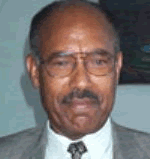
Reports from Addis Ababa confirmed the disappearance of up to eight generals. These generals have been missing for a while now and their whereabouts are unknown.
Reliable sources who requested anonymity due to the sensitivity of their role within the Ethiopian army indicate that the eight generals were linked to the defection of General Kemal Gelchi.
The same sources add that Meles Zenawi, the head of the autocracy in Addis Ababa ordered the detention of the eight generals. The missing eight generals are ethnically from Oromo and Amhara.
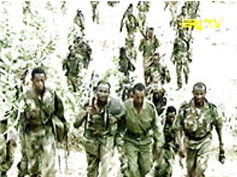
It is unconfirmed whether the generals were killed or whether they are held in detention in an unknown destination. What is known so far is that the disappearance of these generals has created a state of apprehension both within the army and the state. It is feared that an army mutiny may be possible.
Our reporters in Addis Ababa are working closely with reliable sources in order to find out the names of the eight missing generals.

Ogaden Online News
Read more!

posted by Ethiounited Moderator at7:35 PM
0 comments

An outbreak of clan violence forced 100,000 flee Ethiopia

By Holly Fletcher, Globe Correspondent
An outbreak of clan violence this summer in southern Ethiopia has forced nearly 100,000 people to flee their villages, according to representatives from the humanitarian group Oxfam America and a Harvard cooperative who traveled to the region.
Oxfam and the Harvard Humanitarian Initiative, a multidiscipline emergency-response team, said in a report that those displaced by the fighting are living in makeshift camps and are in dire need of water, food, blankets, and plastic sheeting for shelter, as well as long-term village protection. They urged aid groups to send assistance quickly.
News reports have said dozens have been killed in the fighting, caused by land disputes among herders.
The violence presents another crisis for a country and a region already rife with troubles. Floods earlier this month killed at least 900 people and left tens of thousands homeless in Ethiopia. Violence in Somalia and Sudan has spilled over into southern Ethiopia, bringing with it an influx of arms.
``Multiple hits from multiple angles are what makes this region fragile," said Coco McCabe of Oxfam.
The team of researchers assessed conditions in the camps, looking for trends among the villagers' temporary way of life.
``It's the first step in a long process" to help the villagers, said Dr. Jennifer Chan, a resident physician at Brigham and Women's Hospital and part of the Harvard initiative.
The conflict in the Oromiya region worsened the situation for thousands in a country where nearly 81 percent of the population live on less than $2 a day, according to a 2005 World Bank report.
In the camps, the displaced quickly depleted their supplies and ran out of grazing areas for their herds. In particular, the food shortage and lack of access to water -- most walk at least an hour, each way, to a water source -- make hard lives even more difficult.
``The Borena people are used to hard lives and not getting enough to eat," McCabe said. ``They feed the children first."
Terrence Lyons, a professor at the Institute for Conflict Analysis and Resolution at George Mason University , said low-level violence has persisted in the Horn of Africa region. In Somalia, radical Islamic forces control vast swaths of the country and consider themselves the legitimate authority.
But the dramatic increase in violence in early summer results from the ``fragile economic-ecological zone," he said.
``The community disputes, even a few years ago might have been settled by [clan] elders, are now being settled by automatic weapons," Lyons said. ``Rather than staying local, they quickly escalate into widespread warfare. [Southern Ethiopia] is a crisscross region of bandits, rebels, gunslingers, and cattle bandits."
The conflict, spurred by land demarcations that redistribute grazing lands from one group to another, is as much the upshot of a volatile region with destabilized governments, neighboring wars, and environmental disasters stacked against it.
``People don't have time to recover between one crisis to another," Chan said.
Read more!

posted by Ethiounited Moderator at12:18 PM
0 comments

Ethiopia's opposition CUD leader, Hailu Shawel's health deteriorates

Source: Ethio-Zagol
CUDP's charismatic leader, Ato Hailu Shawel's, health was deteriorating, police hospital sources said. The wild fluctuation of his blood sugar level had shocked doctors.
In one test the level rose from 135 to 265 in a matter of hours. "This makes his situation very unpredictable. He can't be allowed to return back to prison right now," a medical source stated.
The chairman also suffers from walking problems caused while he was in the wet and cold Maekelawi cell in November. His eye problem has also recurred because of lack of medical attention in Ethiopia.
Read more!

posted by Ethiounited Moderator at6:15 PM
0 comments

Zenawi's cadres fan ethnic clash in Ethiopia

Source: Ethio-Zagol
TPLF henchmen in the Jimma university, one of the universities in Ethiopia, today lit an ethnic clash between Tigray and Oromo students . The student cadres, who eye witnesses said had been intimidating and harassing other students the whole year, started today the clash after they severely beat an Oromo student.
Rumors then spread that the student was beaten by students from Tigray. A lot of innocent Tigrian students were caught up in the act of retaliation by some Oromo students. An identical incident happened at the Bahir Dar university a day before.
In Jimma, gun shots had been heard the whole day. The federal police which tried to enter campus late afternoon was pelted with rocks by the students.
Read more!

posted by Ethiounited Moderator at6:12 PM
0 comments

Deputy Prime Minister Addisu Legesse draws protesters

Seattle Post-Intelligencer
2005 elections remain an issue
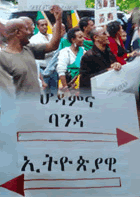
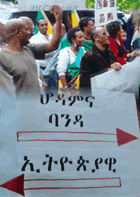
Ethiopia's deputy prime minister came to Seattle Thursday to meet with members of the city's Ethiopian community and drew about 60 expatriate protesters who decried his government's killing of activists last year during a controversial election.
Deputy Prime Minister Addisu Legesse met with Ethiopian immigrants at The Mountaineers headquarters at 300 Third Ave. W. Seattle police and federal officials heavily guarded the building, with about a dozen officers positioned outside the building facing flag-waving and chanting activists.
Muluneh Yohannes, 28, one of several protest organizers, said he and fellow immigrants were trying to bring attention to Ethiopia's political situation. Last year, scores of Ethiopians were killed when they took to the streets to challenge the results of national elections.
Yohannes, who said he sought political asylum three years ago in the U.S., said they also were calling for the release of political prisoners jailed during last year's post-election strife. Many Ethiopians living in Seattle protested en masse last year, too.
"The only thing we can do is show our concern democratically for our people. These killers should face justice," Yohannes said.
Ethiopia's prime minister, Meles Zenawi, was re-elected to a third term last year in parliamentary elections that his opponents and some independent observers allege were rigged.
Zenawi first came to office in the early 1990s and installed a system of federalism after toppling a socialist dictator who ruled Ethiopia, one of the world's poorest countries, for nearly 20 years.
Legesse, the deputy prime minister, and a few other Ethiopian officials, met with about 40 expatriates to speak about economic development projects and the election process in their native country.
An official with the Ethiopian consulate said Legesse's trip was for a few days but declined to comment on the protests.
One attendee, MeKonnen Kassa, 42, who emigrated to Seattle 18 years ago, said that he felt that Ethiopia was unstable and he agreed that it was wrong for people to die. But, he said, he felt Thursday's activists were stifling democracy by intimidating Ethiopians who wanted to hear from the government.
"As long as they behave, they can come in and challenge this guy," he said. "The government made a huge mistake, but we want to listen to the government's side of the story."
Police made no arrests, although one man claimed he was pushed and his camera damaged.

P-I reporter Scott Gutierrez can be reached at 206-448-8334 or
scottgutierrez@seattlepi.com.

***Pictures courtesy of www.ethiomedia.com
Read more!

posted by Ethiounited Moderator at11:17 PM
0 comments

Protest against the murderer Addisu Legesse in Seattle by Ethiopian patriots

By Ethiomedia
It is Seattle – the land of Ethiopian patriots for justice. It is also Seattle where Addisu Legesse, deputy to Meles Zenawi, sat in an empty hall, and felt like a felon on a death row.
He eagerly waited for "Ethiopians" to stream into and fill up the empty seats, and at least save him from the shame of sitting like an inmate in a solitary confinement. He waited and waited but no one was coming, except the usual TPLF cadres who crawled past the roaring lions like some cursed demons. Obviously, it was a tug-of-war between patriots for freedom and the few mercenaries of doom.
Addisu Legesse, responsible for the killings of unarmed protesters following the May 2005 elections, should have seen today how the Meles regime is over, and whether their bloody pastbloody past would turn them into the Hissène Habrés of that Horn who woud never escape court trials for crimes against humanity.
“It is a matter of time before Meles, and I and other butchers like me are dragged to a court of justice,” Addisu must have thought when he sat in an empty hall that was constantly being haunted by the roars Ethiopian lions and lionesses were letting out into the Seattle sky from beyond the picket fence the Seattle Police set up to maintain order.
The Ethiopian patriots were carrying the photos of imprisoned Kinijit leaders like the moral force Mesfin Woldemariam, the charismatic Hailu Shawel, the jewel Birtukan Mideksa, the humble scholars in the names of professors Yacob, Berhanu, Befekadu and many more others. There were others who carried caskets of those innocent Ethiopians who were murdered by the likes of Addisu Legesse and other tyrants whose days are certainly numbered.
Their cursed Apartheid meeting was meant to divide Ethiopians and pit them against each other but Ethiopians were aware that their Ethiopian bond that withstood the test of time would not be broken by a few TPLF sellouts who limped past the patriots only to disappear into the dark hall like ghosts.


--==Comment found from nazret.com==--

"Here is the scoop on Seattle’s admirable reception of Addisu Legesse and friends:

The Vice Premier was invited by a self appointed Ethiopian Honorary Consul General in Seattle named Solomon Tadesse. The Dishonorable Solomon and his wife and right hand Shashu Habtu were members ESUNA (Ethiopian Students Union in North America) and the old timers say that the terrible duo embezzled that organization and moved to Seattle with enough funds to purchase a waterfront house and lease a parking lot in Down Town Seattle in late 70s/early 80s.
The Honorary Consulate is nothing but a façade for recruiting -hodam yemehal ager lijoch- to be supporters of woyanie and the prize per is a 500 sqare meters lot in Addis Ababa musina sefer. Ato Solomon has a 3 million dollar budget from the new diaspora ministry to make Seattle a safe haven for woyanie. As everyone knows Seattle is one city that is not yet tamed by woyanie. Seattle is home to icons of Ethiopian Democracy like Ethiomedia.com and many other outstanding institutions and woyanie is always on the run in the city and today was no different.
The Democratic Forces in Seattle were able to obtain all the necessary permits from Seattle Police to stage a counter rally as well as get their message out about the rally on all local media outlets including NPR (national public radio affiliate in Seattle KPLU). At about 4:00 PM here were over 100 Ethiopians with slogans and pictures of the jailed leaders and massacred Ethiopians during the June and November massacres. There were 0 traitors in the meeting room. At about 5:00 PM the number of pro democratic forces was swelling to 500 outside when a smattering of hodam amaras like Solomon Tadesse, Sashu Habtu, Mekonnen Kassa (aka Aklilu Abreha) accompanied by jeers and catcalls started trickling to the meeting room. Then TPLF members like Kidane and Bisrat started showing their banda face for the meeting and these were also dealt a blow by the democratic forces by making them walk a torturous 500 feet of fence lined with angry and determined Ethiopians. There were eight Somalis and about two Oromos. The Democratic forces sent in five of their reps to the meeting hall learn the effects of their cat calls and shouts on the meeting attendants and promoters. All in all there were 28 people in the meeting excluding the delegates from Addis Ababa.
Addisu Legesse and the other delegates did not dare show their faces to the demonstrators. They were snuck in and out through the backdoor by the garbage and dirty linen discharge door. I say what a fitting entrance and exit for killers, traitors and hodams.

Victory for Ethiopian Democratic Forces!"
Read more!

posted by Ethiounited Moderator at10:24 PM
0 comments

The Failed Mission of Addisu Legesse in Silicon Valley

By Girma Bekele
As reported yesterday, Addisu Legese the ethnic merchant in the service of TPLF, was in Silicon Valley to sell his anti Kinijit propaganda under cover of investment and development in the so called "Amhara Regional State." The TPLF political elite regard the manipulation of ethnic loyalty as the cheapest and most reliable strategy to acquire and consolidate power. Since the appeal of ethnicity as an instrument of political mobilization is largely seductive because of its emotional content, Addisu was hopping a large number of "Amharas" would flock to listen to his development plans in the region he purportedly represents. Who showed up to greet him? You guessed it - selectively invited Tigrians and a few Eritreans who were promised to cash in from the development plans representing Amharas.
To be sure there were a few hodams from Amhara ethnic groups as well but their number was miniscule to the 20 or more Tigrians and Eritreans at the gathering. Out of the 20,000 plus Ethiopians residing in and around Silicon Valley, the gathering could not attract more than 25 people. A secret service agent who was accompanying Addisu asked Ethiopians who gathered outside the meeting hall, "I know the problem in your country and I also know large number of Ethiopians live here but it is funny that the presence of a high government officials could not attract more than two dozen individuals." The response he got was that no one wanted to meet a cold blood murderer.
What Addisu hoped to accomplish during his presence in Silicon Valley did not turn out as planned. In stead he was confronted to answer the reason for the imprisonment of Kinijit leaders and the civic society. The entire session was dominated by question and answer of the prisoners. Those who attended the meeting and confronted him reported that Addisu was arrogant, abrasive, immature in his response. He reportedly said that in accordance with the Ethiopian culture Kinijit leaders were approached by "Shimagiles" for peaceful resolution of the political problem. Since they refused he said, this was what he uttered in Amharic, "Be Agerachin Bahil, Lij Ciatefa Yiqonetetal." The equivalent English translation is: "in accordance with our Ethiopian culture, when children get out of line they get pinched." This response is a testament to his rude and arrogant behavior.
In the absence of his Agazi bodyguards and in consideration for his safety from the Ethiopians he came to visit, Addisu was given secret service protection. Imagine this scenario. His purported mission is to speak to Ethiopians about development plans. At the same time he requests protection from the U.S. government for his safety from the same people he came to visit.
Outside the meeting hall Addisu was confronted by angry Ethiopians who called him "Ante Leba, etc." After the meeting Addisu and his invited guests drove to Hilton Hotel in down town San Jose accompanied by U.S. Secret Service personnel. Once again a few hodams dressed in business suites were seen arriving at the hotel to dine and wine with the butcher of Ethiopian children. The next stop over for Addisu will be Seattle. I hope that Ethiopians in Seattle will give Addisu Legesse the treatment a murderer deserves.

The names of those individuals who were attending the dinner are being compiled. The Ethiopian people deserve to know who is collaborating with their oppressors.

Source: kinijit
Read more!

posted by Ethiounited Moderator at6:31 PM
0 comments

Ethiopia: Medical concern/ Prisoner of Conscience: Professor Mesfin Woldemariam (m)

Amnesty International
PUBLIC AI Index: AFR 25/024/2006
23 August 2006

UA 224/06 Medical concern/ Prisoner of Conscience

ETHIOPIA Professor Mesfin Woldemariam (m), aged 76, founder and former Chair of the Ethiopian Human Rights Council
Prisoner of conscience Professor Mesfin Woldemariam, aged 76, is receiving treatment in Addis Ababa's Police Hospital after collapsing in his prison cell on 18 August. He is reportedly suffering with pneumonia, which is likely to have been caused by the harsh conditions in which he has been held. Amnesty International is concerned that he may be returned to Kaliti Prison in Addis Ababa without receiving all the medical treatment that he needs.
Retired geography professor Mesfin Woldemariam, Ethiopia’s most prominent human rights defender, has been detained since 1 November 2005, and is among 76 opposition party leaders, journalists and human rights defenders on trial on charges of "outrage against the Constitution", "obstruction of the exercise of constitutional powers", "inciting, organizing or leading armed rebellion" and "attempted genocide," in connection to the demonstrations against alleged fraud in the May 2005 elections in Ethiopia (see UA 284/05, AFR 25/017/2005, 02 November 2005, and follow-ups). He is said to be "responding well to treatment" for pneumonia in hospital, but his condition still remains serious and potentially life-threatening.
He has been in poor health for some time and prior to his arrest had been confined to bed for two months with back and leg problems, for which he has reportedly received no medical treatment at Kaliti Prison. He carried out two hunger strikes in December 2005 and January 2006 in protest at his detention and trial.
In Kaliti prison, Professor Mesfin Woldemariam has been held in a zinc-walled cell with other prisoners. In the current rainy season in Ethiopia, the cell is cold and damp. Hygiene, sanitary and toilet facilities are very poor. There are rats, cockroaches and fleas in the cell. Prisoners are allowed weekend visits in a large group, and can receive food, books and other items from their families, but are not allowed private family visits, writing materials or correspondence. They are provided with medical treatment as needed, either in prison or in hospital, but there have sometimes been delays and other deficiencies. Diplomats and delegates or visitors from abroad are sometimes allowed access, but often refused.
Amnesty International believes that the harsh prison conditions and Professor Mesfin Woldemariam's previous poor health have contributed in large measure to his current bout of pneumonia. Some other prisoners who have also needed hospital treatment after being detained in these conditions, including opposition party leader Dr Berhanu Negga (see UA 195/06, AFR 25/020/2006, 14 July 2006, and follow-ups), have previously been returned to Kaliti prison before medical tests were completed and against the advice of doctors, leading to a deterioration in their health. It is feared that if Professor Mesfin Woldemariam is returned to Kaliti prison in similar circumstances, his current and pre-existing medical complaints, combined with his age and the conditions in which he is held, could have grave consequences for his health.
BACKGROUND INFORMATION
Professor Mesfin Woldemariam founded the Ethiopian Human Rights Council (EHRCO), a non-governmental organization, in 1991. He was its chair until 2005 when he resigned and joined the election campaign as an advisor of the Rainbow Party which is part of the Coalition for Unity and Democracy (CUD), the main opposition party. The government has been consistently hostile to the EHRCO, which is the only human rights group (eventually officially registered) investigating, documenting and reporting on human rights violations through its central and regional offices.
Several thousand suspected government opponents from the Coalition for Unity and Democracy (CUD) and other opposition parties were detained following demonstrations in June and November 2005 in Addis Ababa and other towns. They were protesting against alleged fraud in the parliamentary elections of 15 May 2005. During the demonstrations, the security forces shot dead at least 86 people and allegedly many more, wounded over 200 others, and seven police were killed by mobs. A parliamentary inquiry is currently investigating the killings at the demonstration. CUD leaders who were elected to parliament and the Addis Ababa City Council refused to take up their positions. In December 2005, they were charged with instigating the violence. All defendants except three civil society activists refused to defend themselves, on the grounds that they did not expect to receive a fair trial. In early August the trial was adjourned until 4 October due to the annual court recess. Until then, defendants will have no opportunity to bring complaints about their treatment before the court.

AI Index: AFR 25/024/2006
Read more!

posted by Ethiounited Moderator at11:16 AM
0 comments

Ethiopia : Prisoners of conscious in a solitary confinement

Source: Ethio-Zagol
Muluneh Eyuel, Sisay Agena, Eskinder Nega and Andualem Arage are still in a solitary confinement which has no sun or artificial light and with the worst hygienic conditions.
They are able to go to toilet only once a day under armed escort and couldn't meet their families and friends.
Read more!

posted by Ethiounited Moderator at1:36 AM
0 comments

Massive army defections are expected in Ethiopia

Source: Ethio-Zagol
TPLF is attempting to reverse the growing unrest in the Ethiopian army by identifying and clearing out dissenters. The army security has started distributing questionnaire which asks officers to fill their grievances.
The officers are allowed to fill the form anonymously but sources said that their hand-writings and signatures have been already collected by the security to verify the respondents after they fill the forms. This form is being distributed by an army personnel unit which is entrusted with carrying out evaluation appraisal.
According to the sources, this is done to dupe army officers to feel free and express their grievances without fear. Massive army defections are expected in the coming months as the spirit of freedom and democracy which has engulfed the nation since last year's election finally moves into the army.
Read more!

posted by Ethiounited Moderator at1:17 AM
0 comments

CPJ concerned about prison conditions for two journalists

His Excellency Prime Minister Meles Zenawi
C/O The Embassy of Ethiopia
3506 International Drive, NW
Washington, DC 20008

Via facsimile: 202-587-0199

Your Excellency,

The Committee to Protect Journalists is deeply concerned about prison conditions for journalists Eskinder Nega and Sisay Agena, who CPJ sources say are suffering from harsh treatment and deprivation without judicial review.
The two had been held with at least 13 other journalists in Kality Prison, near Addis Ababa, since November 2005. However, Nega was moved at the end of July and Agena on August 19 to Karchele Prison, according to CPJ sources. They are said to be kept with two other prisoners in a small, unsanitary cell and allowed only limited bathroom breaks. Their access to visitors is heavily restricted, CPJ sources said. Some sources said they fear the two may be deprived of light and adequate drinking water.
In addition, Nega is denied the opportunity to see his wife and fellow imprisoned journalist, Serkalem Fassil. Fassil gave birth to their son in June and remains jailed in Kality, despite pleas from CPJ and other human rights groups for her release on humanitarian grounds.
Nega, owner of the banned Amharic weeklies Menilik, Asqual, and Satenaw, and Agena, owner of Ethiop, are on trial with dozens of opposition leaders, journalists, and civil society activists for alleged antistate crimes related to post-electoral riots last year. Their trial began in February but was adjourned this month until early October. The adjournment means that the journalists have no opportunity to raise concerns in court about prison conditions. Nor is their health evident to the public.
You may recall that you met in March with a delegation from CPJ, which was allowed to meet with the imprisoned journalists. You were receptive to our appeals for improvements in detention conditions, and you promised that the journalists would be treated fairly.
We believe that all journalists imprisoned for their work in Ethiopia should be freed. At minimum, they should be guaranteed humane conditions and a fair trial within a reasonable period of time. We respectfully request more information as to why Nega and Agena have been separated from the other prisoners and have been subjected to harsh conditions.
We appeal to your excellency to ensure that the prison conditions of Eskinder Nega and Sisay Agena, as well as all the other imprisoned journalists, comply with basic international norms. Minimum standards set down by the U.N. High Commissioner for Human Rights, for example, require that prisoners be granted adequate space, sanitation, lighting, food, and water. They further state that prisoners should not be punished without being given an explanation and the opportunity to defend themselves.

Thank you for your attention to this urgent matter. We await your reply.

Sincerely,


Joel Simon
Read more!

posted by Ethiounited Moderator at6:46 PM
0 comments

the US has encouraged and financed ally Ethiopia – shades of Lebanon - to invade Somalia

By Eric Margolis
NEW YORK - President George W. Bush likes to call himself `the war president’ and strike martial poses against patriotic backdrops, a trick he learned from another president who never saw military action, Ronald Reagan.
In spite of Iraq and other foreign policy misadventures, and failure to prevent the 9/11 attacks, polls show that when it comes to national security many Americans still regard the Bush Administration with approval and trust.
Their confidence is not well placed. To date, the `war president’ was asleep on guard duty on 9/11, involved the US in four lost wars, and has stirred up a hornet’s nest of anti-American hatred around the globe.
Defeat I: Five years after Bush ordered Afghanistan invaded and proclaimed `total victory’ there, US and allied forces are struggling to defend their bases and supply lines against rising attacks from a growing number of Afghan resistance groups. The war costs $1.5 billion monthly. US-ruled Afghan now produces over 80% of the world’s heroin. The US just quietly deployed thousands more troops to Afghanistan to hunt al-Qaida leaders Osama bin Laden and Ayman al-Zawahiri in a desperate attempt to save Republicans from heavy losses in November mid-term elections.

Defeat II: Remember `Mission accomplished!’ in Iraq? President Bush’s war in Iraq is clearly lost, but few dare admit it. The US has spent $300 billion on Afghanistan and Iraq, with nothing to show there but chaos, civil war, body bags, and growing Iranian influence in Iraq and western Afghanistan. The Bush/Cheney `liberation’ of Iraq has now cost more than the Vietnam War. So much for the `cakewalk.’ Iraq is likely the biggest American foreign policy disaster in living memory – even worse, in many ways, than Vietnam.

Defeat III: Off in the strategic Horn of Africa, another dangerous fiasco is unfolding. The White House had CIA and Pentagon spend tens of millions bribing Somali warlords to fight Islamist reformers trying to bring law and order to their strife-ravaged nation. The Islamists whipped CIA-backed warlords and ran them out of Somalia. Following this defeat, the US has encouraged and financed ally Ethiopia – shades of Lebanon - to invade Somalia, thus raising the threat of a wider war between Somalia, Ethiopia, and its old foe, Eritrea. Meanwhile, growing numbers of US Special Forces and CIA teams are getting drawn into obscure tribal melees in the Horn of Africa and the Saharan region.

Defeat IV: Lebanon is, of course, the fourth major American military disaster. Bush and Cheney encouraged Israel to launch the hugely destructive but militarily fruitless war in Lebanon as the first part of their long nurtured plan to militarily crush Hezbullah, Syria and Iran. The Bush Administration brazenly thwarted world efforts to halt the conflict while giving Israel the green light to tear apart Lebanon. Now, just over a month later, Bush announces he will send $230 million to `help rebuild’ Lebanon – the same Lebanon blasted apart by US smart bombs rushed by air to Israel.
Read more!

posted by Ethiounited Moderator at12:32 AM
0 comments

Prisoner of conscious, Muluneh Eyuel, is being brutalized in Ethiopia

To: Amnesty International
Human Rights Watch
American States Department

A prisoner of conscience, Muluneh Eyuel, is being seriously brutalized by the Ethiopian government as a direct result of his interaction with the representative of the American government in Ethiopia.


On August 11, 2006, the Secretary of CUDP, Muluneh Eyuel, who with other leaders of the party is falsely accused of treason and attempted genocide by the Ethiopian government, met the American Charge d'affaires in Addis Ababa, Ambassador Vicki Huddlestone. The ambassador told Ato Muluneh that the way forward for Ethiopia was reconciliation between the government and the jailed leaders of CUDP.
When Muluneh reminded the Mrs. Huddlestone that his party had always stretched its hands for talks, the ambassador replied that it is still possible to have talks if he and his colleagues in writing accept the country's constitution. It was reported that Muluneh angrily said to her that she wasn't serious enough to be an honest broker.
A week after the meeting, a prison security personnel came to Muluneh's cell and order him to pack his belongings. He then took the 32 years old prisoner to solitary confinement where there are no lights and the sanitation is extremely poor. Muluneh was in the same jail in April and May and suffered serious eye-sight problems due to the lack of light in the confinement.
Prison sources indicated that Muluneh was put in a solitary confinement as a punishment for strongly disagreeing with Mrs. Huddlestone.

Required actions:
inform them that a prisoner of conscience is being seriously brutalized by the
Ethiopian government as a direct result of his interaction with the
representative of the American government in Ethiopia

INTERNATIONAL SECRETARIAT
Telephone: +44-20-74135500
Fax number: +44-20-79561157
Address 1 Easton Street
London
WC1X 0DW, UK

Source: Ethio-Zagol

Read more!

posted by Ethiounited Moderator at5:59 PM
0 comments

EPRDF Government Displaces Anuak in Over 12 Anuak Villages—Is the End of this Regime Near

Anuak Justice Council
For Immediate Release: August 19, 2006.

Enough of this power struggle between the brutal government of Prime Minister Meles Zenawi and the Ethiopian people! Does the EPRDF not know that they cannot find enough force to hang on forever when the people all over Ethiopia are saying—enough? Can they not see the signs of the end and give up? Must they be so relentless in hanging on to the last threads of a dictatorship doomed to fail! They must be recognizing their fragile condition as they have become increasingly relentless in worsening the situation, a move that some see as the last desperate moves of a dying regime. Yet, as they do, increasingly more people are suffering.
As the African proverb states, “the deepest darkness exists right before the dawn.” Might we be in such a darkness? I think so. Discontentment is rising up all over Ethiopia. We are hearing about it. Be prepared, because as it starts to promise the full light of morning, the EPRDF may take out all its weapons and carelessly aim at anyone, out of their own fear of their impending demise. The Anuak may now be experiencing this as they react to another onslaught from the EPRDF.
The hypocrisy of the government’s actions is stunning if it were not so tragic! As Meles Zenawi fights Somalia “to overcome terrorism” and as the Gambella Regional government sends 100,000 birr to help Ethiopians devastated by floods, this same government has created a humanitarian crisis that has again been aimed at the Anuak.
Now, the Ethiopian National Defense Forces (ENDF) have ordered the Anuak in over 12 villages in three districts in the Gambella region of Ethiopia to immediately leave their homes, property and crops. They say they want to root out any Anuak rebels who may be finding support from the locals.
This is a critical time for the crops, which are almost ready for harvesting. Now these farmers who have worked all season to provide for their families throughout the coming year, will have nothing left. It is a time when constant supervision of the crops is necessary due to the wild animals, like monkeys, from the surrounding woodlands that raid the fields. In some villages, reports indicate the ENDF have already destroyed their crops, cutting down the corn and sorghum with machetes.
Some farmers who refused to leave were beaten and taken to detention centers. Anuak were warned that any persons venturing back into the area would be killed. This all happened with no warning and may likely occur in additional villages throughout the Gambella region. The Anuak in the districts of Abobo, Dimma and Gog, mostly women, children and elders, as most of the younger men had fled to Sudan in late 2003, were forced to move from the villages where they have lived for generations, to larger towns in their respective districts.
Instead of relying on farming their land to sustain their own needs, they were left under trees in the center of these towns with no food, clean water, supplies, clothing or shelter. Heavy rains, along with mosquitoes carrying malaria, are further worsening the seriousness of the situation, causing extreme hardship and suffering to the displaced Anuak.
The International Red Cross (IRC) has been given permission by the regional government to provide plastic sheeting for shelter, but no food, clean water or other supplies have been given. Travel in and out of the area is very difficult due to high water, mud and high grass.Yet, at the same time, the Gambella Regional government, which is responsible for the displacement of these people as they collaborate with the defense forces, donated 100,000 birr to displaced flood victims in other parts of Ethiopia. This is not to say that these flood victims are not in need of much help, but the pretense of “caring about the people of Ethiopia” is absurd in light of secretly being the active agent in causing suffering to another group of Ethiopians!
These actions by the ENDF, supported by the EPRDF, exacerbate already horrible living conditions for the Anuak. Reports by a major UN entity, not yet released, indicate that every aspect of Anuak daily life (obtaining water, firewood, farming, traveling to market or for health care in some other village) is so profoundly compromised due to ongoing issues of security related to the intense terrorization of the Anuak by the EPRDF troops, that the Anuak of Ethiopia are facing a crisis of survival that threatens their very existence. In fact, it is reported that refugees from other countries, such as Sudan, living in the refugee camps in the Gambella region, are far better off than the Anuak of Ethiopia. Instead, the Anuak have been the victims of a manmade humanitarian catastrophe at the hands of their own government. Their life-threatening crisis has now intensified with this latest displacement of thousands of Anuak.
The villagers were told that Anuak rebels, resisting the government, would no longer be able to come through the area and obtain any food or supplies, yet it is believed that the rebels may have greater opportunity for freedom of movement now with no one in the area. The villagers have been terrorized as they have been caught between these two forces. The Anuak insurgents sometimes killed Anuak, suspected of being government sympathizers, along with ENDF troops. When the ENDF were killed, the troops would retaliate against innocent civilian Anuak. They usually targeted Anuak farmers, working alone in their fields, or Anuak traveling alone or in small groups between villages on roads and footpaths.
Ever since the genocide of the Anuak that began on December 13-15 of 2003 when 424 Anuak were brutally massacred in the town of Gambella by ENDF troops and militias, with many more being killed in the rural areas, the current government of Prime Minister Meles Zenawi has continued to perpetrate what Human Rights Watch (HRW) has classified as “Crimes Against Humanity” against the Anuak of Ethiopia. Some believe the total of Anuak killed since that time may have reached two thousand or more.
Another major human rights abuses report from Gambella is expected to be released soon that will document further ongoing crimes against humanity at the hands of the EPRDF government of Meles Zenawi. These kinds of reports of human rights abuses are coming out all over Ethiopia to the chagrin of western countries such as the US and Britain who have viewed PM Meles as a partner in the War on Terror.
To date, none of the actual perpetrators are known to have been held accountable. No compensation has been given to the Anuak who have lost family members, homes, property, crops or have damages been paid to those who have been raped, beaten, tortured or illegally detained in prisons and detention centers at the hands of the EPRDF government.
As things look better to outsiders, insiders know that the tragedy of December of 2003 has never ended and may be worsening as this government falters. Instead, Anuak continue to be killed almost daily in this remote area of Ethiopia, which is rich in oil, gold and other natural resources that the government has begun to develop on indigenous Anuak land.
In July of 2006, the Anuak Justice Council (AJC), a non-profit human rights organization dedicated to protecting the rights of the Anuak, has received reports that 21 more Anuak were killed in July alone. In actuality, the number may be higher as information is sometimes difficult to obtain from the most remote areas of the region. In addition, many more Anuak have disappeared and are believed to be dead or detained in secret detention centers. In one district alone, Abobo, since the beginning of the year, 31 Anuak have been reported missing.
Some of the villages included in the displacement are: Bäät Gilø, Gari, Aliew Gari, Ablëën, Oleeny Obwør, Dumbäng, Pø Wäät Alaam, Tier Dangnge, Obay, Atïïo and Omeetbööki/ Bäät Ojëën.
All over Ethiopia, the people are ready to be done with this government that appears to have no intention of leaving. Instead, they are using increasing force against any possible pockets of resistance, in an increasingly desperate power struggle that can only lead to its own inevitable downfall. They seem to be at a loss for options even though the most obvious one, levelheaded negotiations, have eluded them from the beginning. Most do not believe that negotiations with such leadership would ever produce more than another cosmetic manipulation in order to battle on for its own survival no matter what the costs for the Ethiopian people.
Who is left to support the EPRDF? It appears the only government in Ethiopia has been reduced to Meles Zenawi and a handful of his henchman backed up by the Ethiopian military. Now this source of life and strength that has sustained them these last years finally seems to be falling apart with the defection of a top general and many additional troops. No wonder! Although some in the military have learned to thrive on violence, losing their own sense of humanity along the way, many others that comprise these forces are the sons and daughters of those being persecuted all over our beloved country and may not see a way out. Some were forced into the military at young ages and may believe they have no hope for the future after such participation. This thinking must be confronted with the truth that change is possible—the heavy load of alienation towards God, others and self can be lifted, one’s own humanity can be restored even while coming to terms with one’s own culpable actions.
There are countless examples in history of how human beings have changed for good. No matter what each soldier has done or how brainwashed and threatened into conformance each might have been, those expected to hold up this brutal regime may be rethinking their allegiances and the costs of dying to one’s own beliefs and values. If the military stopped holding their guns against their Ethiopian brothers and sisters who want nothing more than to live free of oppression, the chains of injustice would fall.
Those holding the guns are some of the most oppressed because the cost to one’s own humanity is so great. Yet if Ethiopia were free, their own lives would also be freed. The greatest freedom of all, freedom of conscience is available even now. It is time for those holding the guns to realize that a society based on guns and violence is one where not only lives are lost, but where one’s own humanity is sacrificed.
Each will some day be held accountable by our Creator, if not in a court of law, for crimes committed against the innocent. Where will those commanding such acts be? As we know from history, many dictators escape the country, taking with them the money they have stolen from the people and live in luxury in other countries until they die. Others, who have been used to hold them up, become expendable, sometimes paying the price for following orders that are considered “war crimes” by the international community.
Yet, the greatest costs of such actions are usually the moral and spiritual costs. Yet, even now, those holding the guns can release their own chains of bondage inside their souls by turning to God, refusing to commit human rights crimes against innocent civilians. Once those holding the guns join with the people this horrible terrorization of Ethiopians by the EPRDF will end.
So often through the conviction of individuals’ consciences and the power of renewed faith, personal transformation is possible. When that happens one by one, until more and more are added to the numbers, the floods of doom devastating Ethiopia may turn into the green pastures of freedom, reconciliation, peace and democracy for all Ethiopians.
It may be time for such a change, but it must come quickly. The Anuak are undergoing incredible suffering. Some will die as a result of this displacement. Many other Ethiopians throughout the country are in similar conditions. The human toll of natural disasters, such as the devastation caused by the recent flooding, cannot always be avoided, but our own government should not purposely create human catastrophes.
Each of us must exert our utmost effort to intervene for those being robbed of their property, lives, health, education and futures at the hands of the EPRDF. Days may make the difference. Do your part. Do not be discouraged.
Even the ENDF troops do not need to lose hope, but to ask themselves how long will they support this kind of oppression of their fellow Ethiopian people? They should do the right thing or they will become prisoners of their own consciences, being haunted day and night and for the rest of their lives.
People are losing hope, thinking that this government will last until 2010, but that, although highly unlikely, can only happen if those holding the guns continue to point them at the innocent, using force to maintain control by a few. Those holding the guns must understand that they are making a choice when they pull the trigger against the innocent and enforce continued suffering and injustice to Ethiopians. Those with guns have a key to open the door to the future where the oppression by the gun is replaced by the rule of law, liberty and democracy, creating a new future for the children of Ethiopia.
Let us pray that God will walk with us through the next valleys we face as we look forward to the time when the real soul of the Ethiopian people is restored and vibrant life returns to our homeland.
Desmond Tutu, that great South African leader writes in his book, GOD HAS A DREAM, that “the Apostle Paul in the Bible became the greatest missionary of the church he persecuted.” So can the many Ethiopians who have either participated in acts of hatred, intolerance, injustice or in doing nothing to stop it, change the course of the future by deciding to take a different path.
We have seen what seems to be a pervasive sense of guilt amongst Ethiopians—a group shame that is eating away at our core identity. It is dividing us into factions where we can group together for survival, blaming others for things that may be within our own grasp to change. These “survival tactics” have backfired on us now and we are falling apart from the inside. Instead of taking positive action, we find reasons to stay “stuck” in the muck of seeing the faults of others and competitively vying with them for opportunities, threatened with others’ successes and taking advantage of those same “others” whenever possible.
We can avoid looking at ourselves, instead always finding examples of those who have done worse acts, blaming them for what is wrong in Ethiopia, but if we never face our own part of what is wrong with Ethiopia, we will remain powerless to be change agents. We must hold ourselves accountable and do so with great courage. We are suffering, but that suffering does not have to lead us to despair. It can lead us to a God who refines us and perfects us through our difficulties, giving us compassion towards the suffering of others as He has compassion on each of us as the lost sheep for which He is searching.
Each of us is important to God in our flawed condition. Our despair, shame and guilt should lead us to Him rather than drive us away for He knows our weakness and loves us anyway. It is sometimes those most alienated from God, self and others who are most changed through the undeserved mercy God offers.
Those who already understand this, should reach out to their “enemies” and extend a cup of cold water or words of blessing to encourage these “lost sheep of Ethiopia” to be found. It is in mercy that the most profound and lasting change can occur—because it is so undeserved. Force can accomplish compliance, but often it is accompanied by secret resistance. Look at all the resistance groups throughout Ethiopia. However, it is undeserved kindness and forgiveness that most often opens the heart to real change.
Desmond Tutu once said, “There is no future without forgiveness. “Those who are forgiven can become the most grateful for it. Without forgiveness, mercy, restoration and reconciliation, Ethiopia will fall to the enemy—not Meles Zenawi and others like him, but to the poisonous fruit of hate, violence, division, blaming, bitterness and death.
Tutu writes in his final exhortation in his book, “All over this magnificent world God calls us to extend His kingdom of shalom—peace and wholeness—of justice, of goodness, of compassion, of caring, of sharing, of laughter, of joy, and of reconciliation. God is transfiguring the world right this very moment through us because God believes in us and because God loves us.
What can separate us from the love of God? Nothing. Absolutely nothing. And as we share God’s love with our brothers and sisters, God’s other children, there is no tyrant who can resist us, no oppression that cannot be ended, no hunger that cannot be fed, no world that cannot be healed, no hatred that cannot be turned to love, no dream that cannot be fulfilled.”
Ethiopia needs such a transformation and it starts with each person. It must start with you and me until our society and country is transformed and healed. Reach out to God. Reach out to your neighbor. Reach out to the Anuak. Reach out to the flood victims. Reach out to the Ethiopian Somali, the Afar, the Tigrayan, the Nuer, the Gurage, the Amhara, the Sidamo, the Oromo, the Borana and the many others. Reach out to the Ethiopian son or daughter, brother or sister taken hostage by the ideology of hate, violence, and anger who are avenging their losses and fear through acts of terror against others. Reach out to your enemy and offer them a cup of cold water.
Start now and you will see the structure of evil, rampant in this society, collapse before your eyes! Dictators can fight with weapons, but they have no understanding of the “warfare of mercy, forgiveness, spiritual conviction, personal transformation and reconciliation that starts with one person—you and me!


For additional information, please contact: Director of International Advocacy:

Phone (306) 933-4346
E-mail: advocacy@anuakjustice.org
Read more!

posted by Ethiounited Moderator at7:44 PM
0 comments

Addis Ferenji is back in Ethiopia

Here is what she posted on her blog after 5 months of away from Ethiopia.....

"Not only back on line but back in Ethiopia at least before school begins in Europe. My husband and I decided we had no reason to accept being separated the whole summer. He was quite confident nothing would threaten my security. We have therefore bet the Ethiopian government will not take the risk of another scandal refusing me the entrance. A winning bet.
I felt however it was wise not to provoke their anger just before my departure. Please excuse my silence. I must admit I have been quite depressed too and many messages remained answered during this time. The highlands’ fresh air already cheered me up.
I felt anxious the last two weeks especially because I was to travel with my son and our brand new dog but our arrival was astonishingly easy. I doubt Ethiopian secret services are dumb enough to fail to identify me and could hardly believe I was entering the same country I had left 5 months ago after disgusting threats and pressures broke our family apart. The airport staff was smiling, agreeable and exceptionally easy-going.
My faithful friend and driver Mulugeta was there of course as was Mr Ferengi, we headed to our country house in Arsi, impatiently expected by our dear staff members (1) long became family. My son was particularly happy to see again the patient cooks, drivers, gardeners, guards, nannies and stable lads (Yes we have horses too) who have been spoiling him and me during more than four years.
I was greeted home by a special Habesha fasting meal. I was dying for Injera. Junior rushed to disturb new-born dogs –my houses have a tendency to become errant animals refugee camps-, Lancelot, last orphan taken in, quickly adapted to the new environment and I fought back some tears confronted to this discreet but warm welcome. I will have enough occasions to cry a river when I pack for good, pretty soon unfortunately…
Here am I, back to my duties though connections are unbearably slow… when there is any connection.
Proxies (2) allow to surf and most opposition websites remain blocked though I could accede the blogspots’ blogs. Could not read Ethiomedia though Gpass1 though.
Countryside is quiet, looks unchanged and the good old Habesha folk is still smiling, even at us, Ferenji. How the hell can they still smile at us after our governments so badly betrayed their hypocrite commitment to Justice and Democracy ? How can they smile at us after the World Bank resumed the Aid and Wolfowitz dared to assert: "My impression is that in the last few months there have been compromises made by both the government and the opposition and I would encourage people to continue to do that,"?
There is only one Ethiopian opposition, in Kaliti….
Quietness does not mean they are resigned though. They are not, at leas not yet. They still avoid, whenever possible, buying Woyane products and massively boycott the Kebele meetings. (3) “We know it is only lies” they say and there is despair in their voices when they admit they cannot do more, whatever they tempt is too easily put under control by the most brutal methods and numerous spies. They lift a shoulder with a sad smile and say “we have no guns, they do”.
Floods go on killing, thanks to the infamous, Disasters’prevention thing. (4) I heard the PM and his first lady felt an unexpected urge to comfort their oppressed people in a desperate attempt to prove they care for a few hundreds human lives. I wonder who is going to buy this, nobody among those who remember November for sure. Afflicted Meles in a deep mourning suit is a new matter of joke.
Western countries buy themselves a good conscience helping the victims or more precisely, pouring millions of Birr in Federal cashiers.
Diplomats, according to good sources, stick to their incredibly coward strategy. “Yes we can say things to Meles but not write them and say them only if it does not upset him too much…” They are positive, an error like Anna Gomes’ report on May elections is not likely to occur again.
But I am back, if I cannot promise to write daily, I will be in contact with democratic forces in Diaspora all along my stay. Among my projects: bring back Dr Berhanu Nega’s book, ask humble Ethiopians how they are coping with the inflation, check if Woyane really updated to rubber bullets instead of live ammunitions – doubtful-, have a closer look in Cooperation’s mess, civil rights in rural Oromia etc.
Of course, my unexpected death during these holydays should be investigated. I solemnly swear I have no intention to consume drugs, buy Ganja or violate any Ethiopan laws..
I will leave the last words to a cute little neighbour. Of course I blurred his lovely face just in case Federali, recognizing the young terrorist, decided to load him in a truck directed to a military camp."

Addis Ferenji
Read more!

posted by Ethiounited Moderator at6:35 PM
0 comments

Another Journalist, Sisay Agena, placed in Solitary Confinement

Source: Ethio-Zagol
The number of political prisoners being taken solitary confinement is increasing in Ethiopia. Yesterday, Editor of Ethiop newspaper, Sisay Agena., was also taken to kerchelle and put in solitary cell. CUDP council member, Andualem Arage, and journalist Eskinder Nega have been in solitary jail for three weeks now.
Read more!

posted by Ethiounited Moderator at2:08 PM
0 comments

Strong words for US charge d'affaires Vicki Huddlestone lead to a confinement

Source: Ethio-Zagol
The 32 year old CUDP secretary, Muluneh Eyuel, is put back to the solitary confinement.

It was reported that he had strong words for US charge d'affaires Vicki Huddlestone in Ethiopia - when she asked him to make a written acceptance of the constitution as a precondition for reconciliation negotiation.

He was later told by prison security that what he did to the diplomat was unacceptable. The solitary confinement is, according to sources, a punishment for that. Muluneh was in solitary confinement where light was unavailable in April and May.
Read more!

posted by Ethiounited Moderator at1:53 PM
0 comments

Professor Mesfin Woldemariam suffers from Pneumonia

Source: Ethio-Zagol
Doctors who carried out medical tests confirmed that professor Mesfin is suffering from pneumonia. He has loss of appetite, decreased activity and breathing difficulties. When two days ago he was taken to hospital, eye witnesses said that he could barely walk.
Pneumonia is a common lung infection at the Kaliti jail where hundreds of people live in one cell. Police hospital sources claimed that the 76 years old academic and human rights activist is now in a better condition
Read more!

posted by Ethiounited Moderator at1:48 PM
0 comments